My last article Taking stock of Apple was about Apple as an investment– but it made some assumptions that people know how to invest, or what that is about. This breaks the first rule of teaching, "do not assume, explain". So this article explains the basics of financial security or why’s and how’s of investing in the first place. I can’t guarantee you’ll become a millionaire by heeding my advice, but I think I can dramatically increase the odds of that happening.
Financial Security
The Sword of Damocles is a fable about a fool that mentioned to the king how much better his life would be if he was the ruler. So the King traded places with him — but the cost of being the leader was that he had a large sword hanging over his head, hung by a thread (horse-hair). Of course the thread could break at any time and take away everything, thus Damocles quickly learned that the responsibilities and costs that came with the job were very high, and decided he preferred his old life without the feeling of impending doom.
I’m one of those people that always related not having some financial security, and living paycheck to paycheck with that sense of pending doom. "What would happen if" and pessimistic visions of the future, trying to erode my security and happiness in the present. But for me to be at peace in the present, I had to have some security in the future. I learned to save, invest, constantly train/educate myself, and have given myself (and my family) some financial security. Yeah, I know, live in the moment and all that; this isn’t an article on the flaws in philosophy or character that make us insecure – that psychoanalysis will be saved for another article. This is just a primer on how to be financially secure, or at least more secure, based on what I’ve learned – and wished I’d learned earlier in life.
The key to financial happiness
It really is really quite easy. Stunning easy. Four words. "Live beneath your means".
If you can learn to spend less than you bring in, you’re saving and getting ahead. Money becomes far less of an issue. If you’re spending more than you make, and becoming more and more indebted, you are racing towards the slavery of the credit-card and ruin, and giving up your control and freedom to the loan sharks of the world. While you might be pretending to deny it, in the back of your mind, you know that the debt is going to come due, and it ain’t gonna be pretty – and most people I know in this situation are not happy and secure people. How can denial lead to happiness?
There are hundreds of books and articles telling you the same thing; "cut up those credit cards", "pay off that debt" and so on. I’m not going to rehash all the ways that you can do it; if people learn the basics of what using those things cost, and what the rewards of the alternative are, they will find their own paths to success. All the information says the same basic things in different ways, lower your expenses and/or raise your income, and don’t let your expenses grow just because you make more.
Everyone whines and has excuses, "it isn’t that easy", "I have bills to pay", or "you make more than me, it is easier for you", "but… but… but…". Bullocks. As my Mom always told me, "Excuses are made for failures". Find me almost anyone in this country, making any income, and there is someone out there who earns less, but is happier and more financially secure. And the opposite is true too, there are people making dozens of millions of dollars per year, and going broke in the process because they are spending more. Donald Trump basically had to declare bankruptcy a couple times. So it isn’t about the money, it is about your attitudes and how you spend it. So don’t give this message that you’re less intelligent, disciplined or able than other people – just fix it. Those arguments/excuses are fallacy and rationalizations for not learning the basics of self-responsibility or at least financial responsibility. The truth is many people want more than they can afford, and they are not willing to delay gratification. If you’re in this place, it is time to grow up. You know if you had more money than you needed, that you’d be more secure – so stop spending more than you have and create your own peace and security.
Opportunity costs of capital
The first thing any businessperson should know is about the opportunity costs of capital. In investing, this is about weighting the potential risks and returns of investments, and deciding which you prefer. If one investment is 10% return and low risk, and another is 15% and lower risk, well guess which you should choose? Of course it is a bit more complex than that, you need to know net present value and be able to accurately forecast, and there are many more variables like ethics, expertise, and so on. But the basics are all business decisions should be made on business cases; what are the costs, returns, and risks.
In life, all buying decisions should have the same criteria factored in. If you put $1,000 in the bank or in the stock market today, what will it be worth in 10, 20 or 30 years? The numbers are pretty easy to work out. Assuming 3% interest in the bank (fairly high return), you get $1,300 at 10 years, $1,800 in 20 years and $2,400 in 30 years. No wonder few people save, I’d rather have $1,000 to play with now, than have to wait 30 years to get $2,400. But they’re not looking at the big picture. The bank has a lousy rate of return. You should keep some money in there for short term emergencies and because of the liquidity (easy access) – but real savings should be out of the way, harder to get to, and looking much longer term.
Assuming you put the same money ($1,000) in the stock market (fully diversified, indexed against the entire stock market, thus pretty low risk), and averaged over the last 70 years, you’d get conservatively a 10% return. (Actually 14% is closer to real, so I’m playing it safe). This is low-risk mindless mutual fund or index fund type investing. If you spent a weekend learning more, you could probably do much better.
NOTE: The difference between what the bank pays you, a guaranteed low rate of return, and what the market pays you, with a non-guaranteed but much higher rate is called the risk-return (or risk premium). You’re taking a risk in the market, so you get a higher rate of return for it. And the riskier the investment, the more they must pay you (return) to reward you to take that risk. The inverse is true; if you put your money in bonds, you generally get a slightly lower rate of return than the stock market, yet you have lower risk as well. Either stocks or bonds are better returns than banks, but are higher risk.
Assuming you put that $1,000 in the stock market with a 10% ROI (Return on Investment), how much would you get in dollars? $2,593.74 in 10 years, $6,727.50 in 20, and $17,449.40 in 30. Suddenly, it becomes much easier to save. Should you spend that $1,000 on a bobble or toy now, or would you rather have $17,500 at retirement (assuming you’re already in your 30′s). If you’re 25 or younger, you have 40 years of compounding returns and that $1,000 investment results in $45,259.26 at age 65. If you bump that one time $1,000 investment, into a yearly investment of $1,000, the numbers become significant; $18,531.17 in 10 years, $64,002.50 in 20, $181,943.42 in 30, and $487,851.81 in 40 years. Now is buying a pair of Prada shoes and a Gucci Purse, or that new Electronic gadget really worth $500,000 or even $200,000?
Don’t forget the other side – if you bought it on credit, and the credit card is charging you 10% interest (most are more, and have fees), then that $1,000 purchase is really costing you $18,000 in 30 years in interest (assuming you never paid off the principle) – not counting the lost opportunity of investing it. That’s the opportunity costs of capital – learning to weight the instant gratification versus the returns on delayed gratification. Doesn’t that make you want to invest more and pay down those credit cards?
Notice I’ve always said delayed gratification, not eliminated gratification. No one is suggestion you give up all fun and toys for the sake of becoming a rich miser in your old age. And we all have expenses. But we can all learn to get by on less and be happier with what we have. Learn to balance the costs, and delay the gratification. If you can put off buying that boat or taking that trip for a couple years, and put that money to work bank – half towards saving for the trip, and half towards your future, you will learn financial peace and freedom. You will have more money for the trip, thus be able to enjoy it more, and you will have more saved in case of a rainy day, the kids college fund, or for your retirement.
Do you really need the new car now? Sometimes the answer is yes – often it is no. We’re all trying to keep up with the Joneses, and we see what our neighbors have as far as things – but we don’t see what the neighbors have as far as accumulating debt and insecurity, doubt and fear. Remember the opportunity costs. $300/month for four years on that new car payment, is that really worth $60K in 30 years? If you could hold off buying that new car for four years, and put the equivalent payment to work for you (invest it), that’s how much you’d have. That’s compared to an expense of that amount counting the interest on the loan you took, increased insurance cost, taxes, registration, and so on. My wife and I bought ourselves nicer cars, but instead of turning over cars every 4 years, we’ve had ours for nearly 10 years. We paid off our cars in 3 years, and kept making the same payment to our investments for the next 7 years. The reward for our patience and not having the newest cars on the block is that we can afford nicer cars next time, not to mention travel, savings and money for other things.
Debt
There are no magic bullets. Start paying down the debt you have. If you have a lot of credit card debt and own a house with some equity, take out some equity (lower interest loan) and pay down the high interest debt, or get a lower interest consolidation loan. Do things to reduce the interest, and get the payments down – and start saving. Many people advise you to pay off all debts first, or they tell you to overpay your mortgage; they are wrong. Do not throw all your money into digging out of debt. Balance savings with debt. Learn to do both – save, and pay down debt.
If you have a lot of debt, don’t panic. Debt isn’t all bad. If you had a choice between owning your own home outright (say $200K), or having $150K mortgage ($50K in equity) and $150K in investments – the latter is far, far better. Why? From a business point of view, your house is usually appreciating – say at 10% (national average), on a $200K home, that’s $20K/year. What is better, earning $20K/year return on a $50K investment or on a $200K investment? I prefer the greater returns on the lower amount invested. Plus the interest on the home loan is a write-off (tax benefit) against your income tax (Uncle Sam is giving you a 20-30% kickback on that, depending on your tax bracket). And what happens if you lose your job tomorrow? $150K in liquid investments gives you a lot of time to make payments while you find a new job. Trying to get an equity loan without a job is time consuming, scary, and you will get lousy interest rates. Add in that the extra $150K in liquid cash should be earning you 10% returns, and that’s $15K/year you should be making. (Either towards more investment, towards the house, or towards living).
So debt isn’t bad, as long as you are on-top of it, and getting a better rate of return off your investments than your debt is costing you. Look at it this way, if I can borrow $100K at 5%, and get a return of 10% on that money by investing it, I’m making $5,000 per year (and getting a tax write-off) for taking on that risk. And it compounds (the rate/principal increases over time). Of course that play is way usually too ballsy for me – and I wouldn’t recommend it. But you get the idea. The reason some tell you to overpay your mortgage and get out from under it sooner is because it is forced savings. But the truth is you have to weigh the costs (low interest loan) versus other returns of having that debt (tax benefits, investments, padding, etc.), and then decide which is better for you. If you can learn discipline and savings, then overpaying your house is the wrong move. If you have none, then it is the right move. Either way it isn’t about the extreme of "getting rid of debt at any cost", it is about the balance of saving and investing while you’re paying down those debts. Don’t let a myopic debt focus consume you.
Investing
So enough of the "why" invest, let’s get into the "how". Investing is easy. Just start paying yourself first.
Start with a small amount per month or per paycheck that will always go into your investment account (3-5% of your net) – pay that first. Your future is your most important bill. Then pay the other bills, and then enjoy the rest. Over time increase that investment or savings until it is 10-15%. Learn to not let your debts outpace your income. You don’t have to cut up your credit cards – just learn to not rely on them. We rarely carry over a balance month to month, and when we do, we start cutting back on fun or toys until we get them back down. But we’re always making our savings payment first.
The easiest thing to do is grow out of it. You’re going to get raises or promotions over time. The first thing most people do is buy toys or reward themselves. Just see your savings/security as part of that reward. Don’t let your cost of living adjust to your new means (or beyond it), keep your expenses where they are (or slight increase), and increase your savings instead. When my wife went back to work, we just agreed to save most of what she made. We were living without that income, so we knew we could afford to. So we maxed out her 401K and retirement (companies match some funds), we maxed out her employee stock purchase (you can often buy at a discount), we increased our savings, and then we can spend the rest. Again, it isn’t about not having fun, it is about balance the future against the present.
Diversification
So I told you how to save; the Nike, "Just do it", plan. But the next issue is how to invest. And the thing you’ll hear most often is "Diversify". Careful there – like all things, it comes down to balance. Diversification is not a panacea.
The idea is that if you have 1 stock, when it is up, you’re up – but when it goes down, you’re hurting. But if you’re diversified, and have 4 stocks, then when one is down, some of the others will be up, and it will smooth out the ride. Don’t be lulled by that – there are many gotchas with diversification.
Diversification isn’t about how many stocks you have, but how correlated they are (or what their covariance is). Whether you owned 50 stocks that did American Steel, or only 1, it made little difference when most of those companies tanked. Sure, some companies did worse than others, so having 50 stocks in the same industry averaged out the losses over the entire segment – but you were still loaded in only one segment, thus not diversified. All the stocks were correlated (highly interrelated). For diversification you want a low covariance or low correlation coefficient – meaning they respond in opposing ways to similar trends. For example, the stock market and gold or oil (energy) tend to be inversely effected by the same event. War breaks out, and uncertainty drives up the cost of oil and gold, and often the stock market goes down or under-performs. The cost of oil goes down, and many companies are going to have lower costs of energy, thus better returns, so their stock goes up. So the number of stocks for diversification isn’t nearly as important as correlation coefficient.
A "fund" is just a group of stocks, managed by someone. Instead of buying an individual company like Apple, you’re buying a fund like, "Computer Stock Fund" which has a percentage ownership in many companies, including Apple. A mutual fund is "managed" more – meaning there are managers that are constantly adding, removing and shifting percent of holdings in various companies, to try to "beat the street", or outperform the market or segment as a whole. Index Funds (also called Spiders), are just buying an equal amount of shares of all companies in that segment, and they aren’t as "managed" – you are sitting and holding, thus paying less in management fees, and happy earning whatever that market is doing.
Ironically, many people buy a fund (either a mutual fund or an index fund), expecting that they are diversified. But many funds cluster their holdings in a single segment. So if I buy an index fund that is holding many companies in biotech, that’s great – I’m diversified in regards to all the biotech companies (one biotech company going out of business won’t hurt me much), but not in regards to the entire market or in general. If the biotech market is down, then I’m down. All or most of the companies were too highly correlated. If I bought a single biotech company (or a biotech fund), and a single tech company (or fund), then I’m far more diversified, because those things are less correlated.
So the upside to diversification is that it lowers risk. But there are no free meals; there’s a cost to that lower risk. Can you guess what it is? The answer is lower returns. Let’s face it, if I have 10% of my stock portfolio in a company that goes up 100%, and I increased my portfolio value by 10%. If 50% of my holdings were in that stock, and I made a 50% return. Which is better? So diversifying is a form of hedging, but it comes with a price. The question is what is your confidence and risk tolerance – if it is high, you need less diversification, and more risky stocks. If it is low, like most people starting out, then you want more diversification, and lower risk stocks.
Investing
So now that you know the basics, let’s put some money away.
You can certainly pick full service brokers and have them help you manage trades. They have experience and charge a fee for that service and advice. But be careful, their interests are not your interests. Each trade they make costs you more money than if you went with a discount broker (where you’re on your own). Some have maintenance fees, and other things whittling away at your principle or earnings. And assuming they know a lot more than you may be dangerous; some do, many don’t — there are many people that threw away a lot of money trusting their brokers too much. This is why the discount brokers have been exploding; control and responsibility.
The other reason is funds. People can pick good performing funds, stuff money in, and they aren’t trying to trade their way to success, they just let the fund grow on it’s own. Usually, they just agree to put a certain amount out of each paycheck into a fund or funds. Buying (or selling) over time is called dollar cost averaging, since one buy the stock might be a little high, but the next it might be low, so you’re averaging out the total purchase over many smaller purchases. This isn’t a bad strategy at all, and far better than nothing or putting it in a bank (as far as returns). Again, remembering to diversify across funds, and keeping the funds or stocks you are acquiring as uncorrelated as possible. This is a low(er) risk way to slowly become a millionaire.
NOTE: Excel, and many investment tools have ways to help you figure out the correlation coefficient. There was a nice tutorial on the subject here: http://www.macworld.com/2001/05/bc/howtoexcel/
If you’re a savvy investor, have a lot of confidence, or are not risk averse – then you probably want to pick individual stocks and not funds. And you want less diversification; more focus on the better performing securities.
People are scared of risk and self-confidence or the market in general. They think, "Gosh, do I want to gamble $10,000 in Apple stock, that may go up or down, or dissolve and take my money to zero? What if I lose?" True, you can and will lose some money, but you’ll probably make more than you lose.
I’ve learned some lessons the hard way; both making and losing $100,000 in a single year. Since I made it first, and wasn’t playing on margin, it wasn’t that bad – and I’ve recovered and gotten a little wiser. One of the keys to not losing big money in stocks, is called "sell discipline". Say you are willing to risk losing $3,000 dollars, and think that Apple is fairly volatile. You could put $15,000 in Apple stock, and put a stop-loss (a request to sell the stock *IF* it drops below a certain price) at 20% below the buying price. That gives Apple some room to fluctuate up and down, and you will only sell if it drops below your "floor" (tolerance level). If it triggers, you’ll sell, take your lumps and walk away, $3,000 poorer — but you’ll still have enough money to try again (on something else). Thus the most money you’re likely to lose is where you put your floor – and the most you can make is infinite (the stock can keep growing forever).
Now, there’s some more sophistication and risk than that. Stocks can drop fast, fall through the floor, and by the time your shares get sold, you can get less than your floor price. But you’re likely to be close. And the amount of tolerance for risk, or confidence in the security should dictate how far down you put your floor. Longer term investments where you trust the company long term, but they are going through short term "issues", you probably want a higher threshold (percentage). Shorter term, higher risk companies, with less tolerance, and I wouldn’t go above 8-10% below current value.
One trick is to keep raising the floor as the stock price appreciates. My floor on Apple used to be $20 (back when they were at $25), now it is at $55 (Apple’s stock price is in the 70′s). As long as Apple keeps going up, or staying fairly flat, I’m in. If they drop too hard or too far, I take the profits I’ve made, and walk away well ahead. And either wait for the next big run up, or more likely move to something that I have more confidence in. If I had less confidence in Apple, I’d move my floor up much closer to the selling price, and either the company would grow, or I’d let the "market" take me out of that company.
Another trick in this game; you don’t have to go "all in". Put in half of what you want to invest, and see where it goes. If it goes up, you’ve already made some money, and you can put in some more. You’re dollar cost averaging on the way up – but you’re reducing your risk, because you’ve already made some money, and thus it has earned your confidence.
Some people live and die by their "rules" of investing, I tend to be a little more fluid. For example, around Christmas, Apple was dropping down near my floor – but I still had a high degree of confidence because of new machines and expected earnings, and I didn’t want to pay taxes on earnings this last year, so I lowered it a bit. Apple dropped through the old floor, but quickly rebounded, then announced Mac mini, iPod shuffle, earnings and shot up. So that was a gutsy move on my part – but I was looking long term, and think they are going to have a stellar year, so increased my risk tolerance. Unless you’re intimately aware of what is going on with your investment, and have "Grande Cajone’s", it is better to just walk away.
The other side is I decided some other companies might perform better than some of my holdings. While I liked the companies I held – I just figured there was a better return on these others for now, so sold my holdings took my profits and lumps, and got into my other choices. It’ll either work, or it won’t. Remember, you don’t have to be right all the time, just often enough to make up for the losses.
Conclusion
Stocks are not gambling. Gambling is betting that you can beat the odds that are stacked against you. In the stock market, most companies are actually fairly well run (despite our complaints and whines to the contrary). American companies are some of the best run in the world. Thus the odds are stacked in your favor. It’s more like gambling, if you’re the house (casino). There are certainly bad companies out there; ask the Enron or WorldCom investors – but they are the exceptions; for each of them, there are 1,000 other companies creating good things, employing people, investing in themselves (growth) and/or paying returns to their investors (dividends). And if they aren’t performing at least as well as the market or their segment, they know you’ll put your money somewhere else. So they work hard to be efficient and return at least 10%. Would you rather that, or earning less than half that in a bank?
With a little homework, patience (the opposite of greed), diligence and discipline, you can easily be a millionaire. Assuming future returns will be as good as past returns (low risk, diversified fund based investments), it will cost you about $2,000 a year for 40 years, $6,000 a year to make it in 30 years, or $15,000 a year for 20 years, to put away that first million. And it will double an average of every 7 years after that. (Again, assuming past averages). So no more excuses – make sure you’re spending less than you’re earning, and start investing the rest in companies or funds you believe in, and start building your financial security.

LightWedge
Company: LightWedge
Price: $35 US for hardcover LW100 version, $25 for paperback PB100 version, $9 / $8 for neoprene sleeves, $10 for lens care kit
http://www.lightwedge.net
It’s the middle of the night. You can’t sleep. The day’s thoughts are causing commotion in your brain. What to do? Don’t want to disturb your spouse (or roommate or partner). You would like to read another chapter of a book, or an article in a magazine, but you can’t in good conscience flood the room with table lamp illumination.
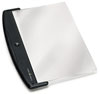
Ah – quietly remove your LightWedge (LW) from its neoprene sleeve (purchased separately), open your book, set LightWedge on the page you’re reading, switch on LW, and finish the chapter as your eyes become heavy and your brain is calm. Sleep soundly until your iPod awakens you with the latest PodCast from MyMac.com.
For a modest price, you can successfully read in the dark with full control over page and ambient illumination, using LightWedge Original or Paperback. Each LW takes four AAA batteries, and promises many hours’ reading per set, or fresh recharge (batteries not supplied). The color temperature is very high, meaning LW produces cool, comfortable light that is easy on the eyes, even at low levels (each LW has both a high and a low setting).
In my case, before LightWedge entered my life, here’s what used to take place around 3:20 a.m.
Barbara: John, I can’t sleep. Can you please give us some classical music from the radio?
Me: Ufjklrieo weiurovci peoreiurow (while I press the radio’s “sleep” button).
Barbara falls asleep in approximately ten seconds.
I stay awake now, listening to classical music for an hour, and eventually return to sleep.
Now, using LW, Barbara quietly opens the LightWedge case and her book, reads for twenty or thirty minutes, and goes back to sleep. The room is neither dark nor light, and it doesn’t bother me seriously.
Barbara expands:
“I saw an ad for LightWedge in the New Yorker magazine. Then we looked at one at our local Barnes and Noble bookstore. I foolishly chose a cheapo clip-on book reading light instead, to save a little money. The light from this gadget was not bright enough, and gave me eyestrain.
“Using the original LightWedge works well with a hard back book. I can also manage reading a full magazine page. John is trying the paperback size, with no complaints so far. We both are using the highest setting because we each like a lot of illumination.
“LightWedge reading puts me right back to sleep. I place the clear spatula-shape on top of the page I’m reading, then move it quietly from page to page as I progress through the book or magazine, shifting LW from left to right to left.
“The brightness is not as good as my nightstand lamp with its three-way bulb blasting, but it’s sure a lot better for spousal harmony.“
The CEO of LightWedge tells MyMac.com:
“A fresh set of batteries will go 40 hours before you notice even the slightest hint of fading light. We had a guy report to us that he read the whole Lord of the Rings trilogy on one set of batteries.“
I hope it wasn’t in one sitting!
Barbara rates her larger Original LightWedge at 4 out of 5, and I agree with that figure for my smaller paperback version. The company sells cleaners and other accessories, and their product lineup will be expanding.
Warning – the two-sided battery insertion tunnel has a couple of quirks:
• all batteries must face the same direction, as indicated
• this little channel is very snug, and the batteries will go in even though at first you think they won’t fit.
LightWedge would receive our highest perfect score of 5 if illumination was absolutely even throughout the spatula shape, but it’s somewhat uneven. Reading is not affected.
There are many potential other uses for a LightWedge. Think of reading books or maps in cars or airplanes, or kids playing with blanket tents, or actual outdoor camping, or working on your car, or dozens more. The company should hold a contest for best unconventional way to use a LW. (A special Night Vision LW using red illumination is available for $45.)
It’s getting late. Time to grab a few hours’ sleep before Barbara does her middle-of-the-night reading session.
I love looking back at Mac writing, not just because it showcases our past writers, but because it is a time capsule into the past. This week, we look at Mike Wallinga and his Wall Writings article “Thoughts on America Online • Adventures In Updating to System 7.5.3”
It is a fascinating look back at the Mac world of mid-1996! Check it out!
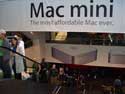
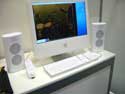
Heaps of praise is being cried out from every corner, from the hobbyist websites to CNN, and all of it directed at the Mac mini. Revolutionary is often heard; though the truth is there has been PC’s with a small form factor for many years now. (However, a tiny or portable desktop PC is never cheap, at least until Apple released the Mac mini.) Still, the good press is nice for a longtime Mac veteran such as myself. I clearly remember the last time Apple got this sort of good press, and it really did change the paradigm of computing: the release of the original iMac. Soon, every product under the sun was coming out in bold colored plastic cases. And it was the iMac that helped Apple turn the corner to profitability.
But I want to take a step back, and pose a “What-If” scenario for you. What if Apple released a sub-$500 Mac, but it was actually as large as the G5?
First, like the Mac mini, this new entry-level Macintosh has almost all the same specs. It is a 1.8GHz G4. It ships with 256MB of RAM and a 40GB internal hard drive. It does not ship with a mouse or keyboard. It is not metal or aluminum, but the same type of look and feel as the Mac mini, only in tower form. Unlike the G4 from two years ago, it does not sport “handles” or anything else of the sort. In fact, it is simply a smooth tower, no curves at all. A rectangle if you will, albeit with rounded corners like the Mac mini.
Unlike the Mac mini, it is fairly simply to upgrade, although Apple does not incorporate the drawbridge side door as it did with the G3 or G4. Instead, you remove the side panel as you do the G5; it simply slides up and away when you release a lever on the back of the computer.
It is quite, much like the Mac mini. It does have a Powerbook G4 type of fan, very small and only operates when the unit gets warm. It also sports all the same ports as the Mac mini, but it actually puts a USB and Firewire port on the front of the unit, right below a power button.
This new tower Mac G4 only has one memory slot. The processor is not a daughter-card, and it cannot be processor upgraded. There are no internal PCI slots. In fact, in the back of the unit is a slot for the power-plug, another USB 2.0 port, and a sound-out mini plug. And for the sake of questions later, it also has a front sound-out port as well, much like the G5’s.
So here is the crux of my question: would it be all the rage in the press as the Mac mini is? It would be much more simple for home users to upgrade either the RAM or Hard Drive. It would cost the same. It would look similar insofar as color and case materials. It would actually have ports on the front. It would ship with iLife ’05. There would be a $499 and a $599 option.
What do you think? This article is all about getting your reaction and opinion to the scenario I created above. Same basic machine, albeit a tower. Please post your opinions below.
MyMac.com’s PodCast (Still no name, help!) is now ready for downloading. Hosted by Tim Robertson and Chad Perry! This week, special guest Tad Scheeler!
Download the show HERE in MP3!
PodCast Show Notes: 1/27/05
Apple lowers Mac Mini prices on BTO!
Jim Heid’s video at PeachPit. Very cool, check it out!

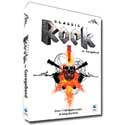
Rock For GarageBand
Company: Advanced Media Group
Price: £30 (about $55)
http://www.samples4.com/catalog/
I’ve done reviews for other GarageBand loop packages before and it’s probably the most fun type of review for me to do. Some of course are better than others and the biggest problem I have with those are that I spend too much time going through the loops and arranging them and posting them and…and, PHEW! Maybe I should just talk about the “Rock For GarageBand”
One of my complaints in the past with loop collections is that many of them strive for quantity over quality. It’s been a question of “HEY! Look how many loops we have in THIS collection!”, which means nothing if you don’t actually use them. This has not been the problem with Advanced Media Group’s Rock For GarageBand collection. This collection..um..ROCKS! If you’re a fan of 70’s era hard rock (think Deep Purple, Led Zeppelin, and the like), or the current hard rock revival (Bands like Jet, etc) there is a lot to like here. While there are not as many here as compared to some other collections, each loop here is a keeper. There are roughly 1100 loops all told and most are geared toward hard rock or metal. Considering the name of the collection, this probably doesn’t come as a big surprise.
There are some real nice touches as well. Of course first and foremost is something that many of these collections have started doing by putting an identifying tag in the idents to make them easy to find. Advanced Media Group puts the tagline “AMG” at the beginning of each loop making them a snap to use after GarageBand indexes them. Installation is a breeze. Insert the CD and fire up GarageBand, Find the “Classic Rock – Apple Loops” icon on the CD and drag and drop to the bottom half of GB to index them. Let GB do its thing and before too long, your new loops are ready to go.
Another nice feature is that AMG incorporated some easy to distinguish initials into many of these loops to help build projects that require a “certain sound”. Want some Led Zeppelin booming drums and Jimmy Page inspired guitar solos? Look for loops with either “hz” or “mz” in the description. How about AC/DC or Pink Floyd? Metallica, Van Halen, or White Snake. Let’s go deep into the 70s with some Deep Purple inspired loops. They are all here and then some. Screaming guitars, deep moody organs, kicking drums, heavy bass, and rock inspired synths are what this collection is all about. Click this link to hear my Zeppelin homage called “Heavy Mental”. Broadband recommended since this is over 4.1 megs in size.
If you want saxophones or church organs, look elsewhere. Same thing for Rap or Blues, this collection is not for you. If you’re a rocker that pines for that 70s sound or its current revival, there is no better collection of Rock loops that I’ve found than right here.
My only complaint is that there is no US distributor for AMG, but according to their website, a Florida location is being worked on as I write this. In the meantime, they do accept US currency for their collections (and they have many others besides this).
I give AMG’s Rock for GarageBand a solid MyMac.com rating of 5 out of 5!

Mac ANNOYANCES
How to Fix the Most ANNOYING Things About Your Mac
John Rizzo
Publisher: O’Reilly
www.oreilly.com
ISBN- 0-596-00723-x
US $24.95
CA $36.95
Author John Rizzo’s Mac Annoyances is a slim book that straddles the line between a “let’s learn the basics” newbie book, and a comprehensive reference book.
Rizzo has written about Macintosh things that annoy him the most. I can relate! While we all love our Macs, every Mac user has experienced bothersome things about the Mac user interface. We all work with applications that have “features” that are frustratingly less-than-intuitive. We’ve gotten used to them, but have never accepted them.
In 157 pages (including index) Rizzo has compiled his “Most Annoying” list, and written a fine little book about how to deal with them.
Annoyances are grouped by category:
Mac OS X Annoyances
Email Annoyances
Internet Annoyances
Microsoft Office Annoyances
iLife 04 Annoyances
iPod Annoyances
Hardware Annoyances
Mac OS X Annoyances is a fine collections of hints and tips to get around the rough edges of OS X. My favorite tips addressed easier methods of naming file when in the Save dialog box, how to switch applications like you used to in the good old OS 9 days, and figuring out how to get Key Caps back.
Also quite handy was the collection of tips on sharing and mounting Windows file servers. With Panther, Apple finally fixed some of the “de-improvements” they created with 10.2.x, working with Windows servers still has to be one of the more maddening parts of OS X. Rizzo spells out the best ways to deal with Windows servers. You’ll learn when to mount them using the Browse command, and when to mount them using the Connect to Server command.
Email Annoyances
In this section, Rizzo made my day with his tip to use iChat (or other instant messaging clients) to send files too large for regular email mailboxes. I frequently have to send large attachments, and I tire of asking recipients to make sure they’ve emptied their mailboxes so my attachment won’t bounce. Even then, most email accounts can’t handle attachments larger than 10 megabytes. The only drawback to using a chat application is that the recipient has to be on-line with his chat client for this to work.
Microsoft Office Annoyances
This section should be a book (a LARGE book) of its own. How Rizzo managed to prune the list of eligible annoyances as much as he did is amazing. Office has more features buried under layer upon layer of option-laden dialog boxes than I’ll ever be able to remember. Even when I find the one I’m looking for, it has some frustrating quirk.
Rizzo lays out 24 Word annoyances and their solutions. I’m not going to list them all, but I, a self-proclaimed word-processor junkie who thought he knew Word, found much good info I’d not heard before.
The book’s production values are good. I do wonder what the art director was thinking when he/she picked a violently vivid neon green for the cover art background. The page layout is easy on the eyes, with the right amount of white space around screen shots and illustrations to promote easy reading.
When I first cracked open Mac Annoyances, I thought it would be not much more than a collection of shopworn hints that only newbies would appreciate. I was quite wrong. While the power-user won’t find as many nuggets as the rank beginner, there are plenty of tasty tidbits to enjoy.
The other day, a friend (who was one of my professors) asked me if I thought she should buy some Apple stock. Ironic, since the same day my brother asked the same thing. Being that I’m a wordy sod, and she was one of my teachers in business school, I felt I not only had to give an answer, but explain and support my answer.
The short answer is that I’m sitting on my Apple stock, but would still rate it as a “buy”, and told my teacher and brother as much. Of course at over $70/share it is not as good a buy as it was last year at $20. But just because it is that high doesn’t mean that there’s no upside left. Quite the opposite, now that it has proven itself, there may be a lot more room to move. (Growth investors will know what I mean).
It is hard to compare Apple to it’s peers because it has none. Apple isn’t quite a Dell or a computer manufacturer, because there’s far more loyalty in Apple’s brand and products than PC clones, and Apple’s software business supports and increases the loyalty of their customers. And Apple doesn’t just slap parts from other makers together; they actually designs and integrates computers, which few PC makers do (Sony is the closest). No other PC company has Apple’s level of integration; making the OS, designing the hardware, and selling the products through their outlets. So Apple should be valued higher than anyone else in the Computer segment. And while Apple is often seen as computer manufacture, it is in many other (higher performing) segments as well. Apple is has a consumer electronics business, but with higher margins, a top name, and it’s own direct retail. Apple is a new-market dot-com type company, like a Yahoo or a Google, because they do a ton of business on the Internet (.Mac, iTunes Music Store, QuickTime), and in an industry (digital music) that they just own and is growing explosively. The tangible products (physical devices) means they don’t have the margins or a pure dot-com or software company, but that gives them diversification that makes them more stable and “brick and mortar” as well as nearly pure virtual. Apple is also a retailer with over 100 locations and growing, with both the assets and liabilities associated with that. So it is a little of everything, and that breadth has confused wall street, resulting in a way low valuation — but they’re starting to get it. So I see this last year’s growth as just the start of the correction (upwards), as the analysts’ vision continues to clear, and they start to get Apple.
Investors
There are two types of investors; value and growth.
Value seekers are hunting the downtrodden and undervalued “hidden gems”. These underdog lovers believe that eventually people are going to catch on to what they see as valuable, and bring these stocks up to their true value. They believe that efficient market theory is behind the curve, and they are ahead of the next big adjustment.
Growth investors aren’t looking for growth of the company or industry as much as in the stock. It is about trying to ride on the coattails of an exploding stock and ride the hype or investment trends upwards (and get off at the top).
In both cases the fundamentals can make a case, but may not be as important as some think they have to support the story, but only to a point. The dot-coms had fundamentals trailing stock performance by years or decades, but that didn’t stop investors from making money on the rising evaluations. And even with corrections, many outperformed the market at large. So you can make money, or lose money, using either investment reasoning. In fact, if you’ve got a diversified portfolio and some patience, it isn’t that easy to lose money on the market.
Why Apple is a good growth stock
Now the fundamentals have to back up growth investors stocks, and Apple’s do but the growth buyers are looking for stock trends. Growth hunters are often chart-men — those looking for a stock to break out above of a previous high water mark with high volumes (points of resistance). Add in lots of institutional investors because they tend to be stock squatters, eating up large chunks of outstanding shares, and tend to think long term. The idea being the laws of supply and demand; if more people want a stock based on its past growth and lack of supply (as much of the supply is already gobbled up and tightly held), then the demand will drive up the price. Of course they usually want to play with leaders in an industry or segment, because that’s where the real growth potential rests; the “out-performing” nature of that company in it’s segment means that an unequal number of people looking to be in that segment will pick that stock (thus more demand).
By those criteria, Apple looks pretty good. 71% held by institutions. Compare this to 64% for Dell, or 11% for Google. (Google’s is offset by high insider ownership). And you look at numbers like how much volume is being done — a lot of activity, and few outstanding shares for Apple. It hints to chart-watchers that there could be a lot of competition for the remaining outstanding shares, sending the stock rocketing skyward.
Growth guys look at stock targets, and how likely a company is to make or exceed them; encouraging others to jump on board (and drive the value up). Well, analysts target Apple from $75 to $105 and are constantly revising those numbers up — a good indicator. And Apple has exceeded their expectations and beaten the street almost every quarter for the last couple years. There are certainly some bears as well, but the consensus is positive, the trends are positive, the demand for their stock is going up, and the puts have been going down, the institutions and insiders squatting is high, thus a growth guy would be likely to say, “good pick”.
Why Apple is a good value stock
Far more investors are value investors; those that want to buy a stock when it is undervalued or likely to grow. They tend to be more numbers focused and love to look at ratios (and less about stock trends). So let me rattle off a few of the fundamentals and statistics.
P/E is the stock value divided by the earnings; the lower P/E means the stock is trading low for the earnings (meaning undervalued and there is more growth opportunity). Trailing P/E is for the last 4 quarters, projected is for the next 4 quarters. Apple’s trailing P/E is at 55, which is a little high compared to Dell at 33. Compared to new-market companies like Google or Yahoo, this is miniscule (often a P/E of 100 or more). Apple was at 95 recently, but their earnings grew so quickly, that the ratio has plummeted. (Showing more growth potential). So trailing earnings is for backwards thinkers; the market is about the present and future. In fact, if you look at their forward-looking earnings and P/E, they are in the low 30s. That’s assuming they don’t beat the estimates (which they’ve been doing a lot lately). So Apple looks great.
Earnings Per Share (diluted) shows what they are making, divided by number of shares. Higher is better (they are undervalued). Apple’s 1.22 is good compared to Dell’s 1.21, not to mention the anemic .8 or .3 for Google or Yahoo. New markets tolerate lower earnings because of future potential, thus the Google and Yahoo story. Well Apple’s in a major new market (digital music) AND they have a higher EPS. If you corrected Apple to these other companies levels, they’d be trading much higher.
Total cash per share (the dollars backing up each share in case of crisis) has Apple with nearly $16, while Dell has only $3 and Yahoo is at $2. And with low debt and $6.5B in the bank, Apple is very cash rich and shares are seriously backed up. Apple has 22% of their entire valuation in the bank, as compared to 7.5% for Dell, or 3.5% for Google. Apple is so rich, that I’d like to see Apple lean it up a bit, and put that money to work more. But the point is by this metric Apple should be trading 3-6 times the current levels ($210-420/share).
Price to Book value is what the stock is trading for divided by how much value (assets) are in the company. So lower means the stock is less valued compared to the assets. And Apple is way low (good value) at 4.8, versus Dell at 17, or Google at roughly 20 and Yahoo at roughly 8. Apple’s stock would have to be trading above $250 to be valued equally with some of those other stocks. And truth be told, I see a lot more growth potential for digital music and what Apple does than what Dell does (package other people’s components up and ship them). Long term, there’s no doubt that Google and Yahoo are on a rising tide but Apple is selling services that people want on the Internet; like the largest music store, one of the largest consumer product sales sites, and a huge hosting service (.Mac). Frankly, Apple’s internet business has more growth potential than Google or Yahoo.
In total valuation, Apple is running way low. A market cap of $28B, while Dell with many lower performance numbers and growth numbers nearly 4 times that at $100B. Google and Yahoo are both valued at nearly twice as much as Apple at $54B and $50B. So Google and Yahoo make $3B a year (net) and are valued at twice Apple which nets over three times as much (at over $10B)? At least with Dell the net revenues are high (nearly $50B). But if you look at growth trends Apple is the better story than any of them; most of Apple’s earnings werer in the last quarter and rising hugely, gross sales is growing practically exponentially, margins are holding and improving.
Now there are many other indicators; some positive and some negative, but these are some biggies for me. There’s always ROE (Return on Equity), ROA (Return on Assets), but those are rearward looking indicators. That’s fine for looking at the past — but in a forward looker. They also may be false indicators as they are showing how much room for improvement a company has, while other show that they are peaked (and fully lean). ROS (Return on Sales) is another popular one, but I’m more concerned with trends (which are positive) than with present or past. Apple earnings growth is phenomenal at 300%, compared to Dells 24%. Better if you start breaking it down by segment.
The point of this mumbo-jumbo is that Apple certainly has some numbers to pique the value investors interest, and imply there’s a ton of room for growth in Apple’s valuation.
Why do I think Apple is a good stock
Now I’m not a pure growth or value investor; I’m a private investor. We factor in many other things, what the company does, what Apple does, how they do it, speculation on the future of society and how it is reacting, as well as operational and business trends within the company. So tell me a story, and make it a good one; why should I bet on AAPL? Or why do I want to own a piece of what they do?
Business wise, I’ve seen operational improvements in the company (with room for more). I’ve mentioned already that Apple’s iPod sales are growing explosively. But I think the trends of digital music (as well as movies next) are going to be a radical shift for society. We are only beginning in this area, and Apple has proven to be the pioneer (so far). Factor in future options like video (if/when the bandwidth/infrastructure options catch up), and Apple’s ties with entertainment, and that’s a good piece of the story.
The Internet is exploding, and Apple is everywhere on the Internet. They sold most of the top selling items on Amazon, and that’s not counting running one of premier electronic sites on the Internet. People discount the Online Apple-Store because they are selling mostly their own goods, but they’re selling a lot of them; more than most other sites. Will they expand this opportunity? I suspect so. Add into that .Mac, and the iTunes music store, and Apple has a heck of a lot of experience and success in the internet, and is making more money off it than the Internet companies people are gobbling up because of what they might do in the future.
Apple had like 370% growth in digital music year over year, and they own 60% of the market (and the 40% was all in the memory stick version of players) — but Apple just released a product to own that segment of the market as well. So I expect similar sales growth and significant marketshare gains, in an exploding societal trend. I still consider Apple medium risk in this area, in that a good music competitor could totally pop the bubble. But realistically, it would have to be a lot better to break the brand recognition they already have.
I already mentioned the Apple as a computer sales company. Apple did well last year and they had a bad year in computer hardware (supplier constrained a few times, few major new models), and still had significant year over year gains. They had no major OS releases, and a few applications/upgrades. Imagine what this year can bring.
Apple has a major new version of the OS coming out (with guaranteed revenue stream) years ahead of Microsoft, and that means Application refreshing, with the associated revenue streams. Apple has improved supply chain problems, and suppliers like IBM have gone through their major transitions in process technology (which others are trying to catch up on). Apple has lots of room to refresh the PowerBook and iBook line, a high margin segment of their business, and one of the highest growing areas of computers. Apple has proven they crush the competition in design and portability. Apple has a ton of headroom in moving upscale in higher end servers and workstations, right as they are starting to get acceptance in enterprise. Imagine how much better Apple can do this year, just by keeping on top of demand (or staying close), more model refreshments, and a few partnership agreements. Apple and IBM could do some interesting things in enterprise, Motorola in cellular, Sirius Satellite Radio and iPod integration (an audio version of a DVR?), Sony’s multiple failed attempts in competing with Apple could result in them joining with them, and so on.
And there’s lots more to the story; Apple is getting a halo effect and computer sales are going up because of iPods, again a market that should be two to four times as large as it was last year (conservatively). Apple released their lowest price machine ever (low margins but high volumes will stabilize perception). Already demand is exceeding optimistic forecasts. Add to that technology boosts. IBM and Motorola (Freescale) both have major leaps in processors, with multiple processors in a singe package/chip expected this year well ahead of Intel, whose also stated their intent to head in this direction.
Apple gets the future of technology and has always led. Apple’s past failures weren’t because of predicting trends they almost always led on those, they just failed to successfully promote their ideas or follow through on the business side. Steve Jobs has changed that, with some room for improvement. Still, buying Apple is not only based on what they are doing well today, but what new trends and industry segments they might dominate tomorrow. Based on their recent past, there’s a lot of argument to buy the company on that alone. But the Computer industry has become more commoditized and more mature. They are buying machines to solve problems, and realize in many areas, Macs are better (security, cost of ownership, ease of use, reliability) and they’re making strides with software compatibility. Many are frustrated with Microsoft and Windows, and looking for an alternative that Apple may be able to fulfill.
I’m not a stock analysts, but I have done fairly well with my own stocks, hence the reason I think people ask me what I think. Of course I’m not telling you what you should do, I’m just explaining the reasoning behind why I’m doing what I do. Given all those things I’ve mentioned so far, I’m putting my personal target for Apple at $110-120 by the end of the year. I wouldn’t be surprised if they hit $140 and split early next year. Personally, I’ll gladly take 100% a year on a relatively low-risk investment… but that’s just me.
So you may be asking, what the heck is the deal with these PodCasts you keep seeing here at MyMac.com? Actually, it is a combination of a new and old technology, but for those new to it, this article will act as a sort of primer to get you started.
First, a PodCast is sort of like a radio show in that it is all audio. In our case, as it is with all PodCasts, it is a simple MP3 file you listen to. You can either listen to it online in your web browser, in iTunes, or on an MP3 player, such as an iPod. (Hence the name.)
So how is this any different than any of the MP3 radio shows that have been around for a few years now, you may be asking? First and foremost is the distribution method used. Unlike old MP3 internet radio shows, a new technology was created around a year ago that takes advantage of RSS (Really Simple Syndication) feeds. As a newbie, you don’t have to worry about any of that sort of thing, though. You only want to know how you can get the PodCasts to your iPod or iTunes, right?
There is a slew of new Mac and PC programs which will allow you to “subscribe” to a PodCast. On the Mac side, the most popular, and the one I use, is iPodderX. The interface to iPodderX is simple and easy to use and understand, and it works very well.
When you launch iPodderX, you are presented with a list of PodCasts that you can subscribe to. (At the present time, because our own PodCast is so new, it is not yet listed there. Yet.) There are thousands of PodCasts to choose from, covering a wide range of topics. If you are into something, chances are you can find a PodCast about that subject.
Once you find an interesting PodCast you would like, you simply click a + button to add it to your PodCast list. You can then have iPodderX automatically check for new shows of your chosen PodCasts, or manually check it. iPodderX will then download the most current PodCast and, if you like, send it to your iTunes music library. If you also want those PodCasts on your iPod, you simply have iTunes synch to the iPod. Viola! New content every day, all ready for your listening enjoyment.
What iPodderX does that makes life easy for you is it subscribes to a websites RSS feed. When a new PodCast is posted on said site, the RSS feed is automatically updated to reflect it, so that iPodderX knows there is a new file. The RSS feed uses “enclosures” so that the iPodderX (Or any PodCasting subscription program) will download that file, automatically kick it over to iTunes, and iTunes automatically puts it on your iPod the next time you run a synch.
Sound simple enough?
Of course, you don’t have to have an iPod, nor even iTunes, to work with iPodderX. In fact, you don’t even need iPodderX if you simply want to listen to a PodCast in your web browser. Remember, these are nothing more than an MP3 file, which all web browsers now support. (At least good ones do.) For instance, our own latest PodCast is at this link, which is a simple MP3 file that will play right in your browser. However, it is a pain to manually visit a website simply to check for a new PodCast, so using iPodderX saves a lot of time. Run it in the background while your computer is on, and it will do all the work for you.
If you have any questions about PodCasting, please use the comments section below!

MyMac.com PodCast for January 20th, 2005. Download the MP3 here. Tim and Chad shop online for a Mac mini. With upgrades, how does the price compare to a low-end iMac G5? Also, the dog keeps licking Tim. ANd now our RSS works thanks to David Every! 32:59 seconds long at 15,879K in size.
Send any feedback after listening to tim@mymac.com!
Dude, you got Dell! Yes, I have a Dell laptop, it was required by my work, and now I have one. And I have my great, but heavy PowerBook 17” from Apple too. Both have extended warranty plans on them. Apple’s cost more than the Dell’s, and my 17” PB cost more than the high end Dell laptop too. But then again, we always knew Apple was more expensive, this is no surprise.
When (not if) my Dell laptop breaks, I call Dell on the phone, tell them the problem, and they immediately send me either a replacement part I can install myself, or a complete computer replacement if the problem is critical. That is right, the UPS guy arrives with a new or refurbished laptop configured exactly like the one I own within two working days. With just a small screwdriver, I open a small panel on the bottom of the laptop, pop out the hard disks on both machines, swap them, and boot up the new machine. In a manner of minutes, I am back up and running as before. I plop the dead machine or part in the box they sent the new one in, place a pre-paid postage label on the box, and the UPS guy whisks it away the next day. In typically 3 to 5 days, I am back up and running and the problem is now Dell’s, and I am done. (If the HD breaks, they simply send a replacement, and I swap them the same way.) I believe this “Gold” service costs under $300 for 3 years.
When (not if) my Apple PowerBook breaks, I call Apple. They argue with me about reinstalling the OS. They argue with me about resetting the PRAM. They argue with me about removing applications that they do not like. They argue with me about problems not being covered under warranty (like the bright spots on my display which drive me nuts when using Photoshop). Basically, they argue about doing any service at all. IF, and I mean if THEY decide to repair the problem, they send me an empty box via Airborne Express (who has to be the worst carrier in the world.) 3 days later, after backing up the entire HD, I put my PowerBook in the box; add a note about what is wrong (because if you do not, even though you spent 30 to 60 minutes on the phone with Apple Care, they WILL forget to fix something you asked to be fixed), and then call Airborne, and ship it off the next day. Apple says it may take up to 14 working days to get my machine back, but in their defense, it usually comes back within a week. Total time, 7 to 20 days of no machine. This service costs $349 for 3 years
Which service plan would you rather have?
My wife and I own an older Lexus and a newer VW. When the Lexus breaks (not if), I take it to the Lexus dealer, they give me a loaner for the time it needs service, and they usually fix it within one or two days. If it is a major problem, Lexus will come pick it up from my work or home, and drop off the loaner car at the same time. My neighbor’s BMW service is EXACTLY the same, with loaners and pick up service.
When the VW breaks (again, not if), you must to drop it off by 8 AM at the dealer or they will not look at it, EVEN if you have an appointment. If it is broken badly, you must tow to them, they will not come and get it. They do not give loaner cars unless it is a recall service, and then ONLY if they have one of the two or three available, otherwise too bad. They typically take longer than a day even for simple repairs, and usually break something else in the process so you have to go back again. This was EXACTLY the same as the service on my Ford Mustang.
Which service plan would you rather have?
I keep hearing people comparing PC to Fords and Macintosh to BMW all the time. Strangely enough, when it comes to service, it seems the Dell is the Lexus or BMW, and Apple is the Ford. What gives?
And why is it that Apple can never seem to understand that many people want to upgrade or change their memory or HD on their computers themselves? I do not even know how to upgrade the HD on my 17” PowerBook, but I assure you there is no small door on the bottom to swap it out. And their is no easy way to add more memory either. Apple removed the pop-out keyboard on new models, so no more internal access for the user. The Dell opens easily with the removal of a few OUTSIDE screws. (Editor’s Note: The new Apple PowerBooks do in fact have an external door for memory upgrades, removable via four small screws)
And look at the miniMac! How hard would it have been to put a small door on the bottom to allow one to swap out the memory for a large size? Why not add a small door to gain access to the HD inside as well do that can be upgraded? How come the battery on an iPOD is not accessible from the outside by the user, so when it dies, the customer can simply purchase a replacement and quickly install it? I have been able to do that on cordless phones and every rechargeable Sony product I have ever owned for way too many years.
Apple has created and continues to create some very cool products, but they are totally clueless when it comes to service. Apple Care service is awful, especially when compared to companies like HP, Dell, or even Sony. User accessibility to most Apple products is pathetic or non-existent, which makes no sense at all.
And how come Apple owners do not get a break on things like .Mac renewals? How come current owners do not get things like “loyalty purchase programs” that even General Motors has figured out, to offer discounts to upgrade to newer hardware?
What I want to know is why is Apple’s customer service so bad? Is this some sick method Apple has created to get even more money from us on service, parts, upgrades and repairs? Has repair and parts become a large profit center for Apple now, so they need more ways to make more money on us? Do they think so little about their customers that they themselves do not care if the customer can access upgrades and repairs themselves?
Hello Apple, wake up call time. Yes, your products are cool and slick, but your customer service stinks! Your customer’s are paying the BMW or Lexus price compared to the competition, but being treated like swine when it comes to service and parts. It is time to start treating your customers like the BMW or Lexus owner you keep pretending them to be, and let them know you want them back. Several people I convinced to switch from PC to Mac say they will not buy Mac again. Not because of the machine, but because of the lack of ability to upgrade and repair themselves, and how badly they felt treated when they needed service.
And do not even get me started again on the “Genius Bar” in Apple’s stores. What a joke!
A Decade of MyMac.com – 1995 – 2005 Part 1
During the New Years celebration, many people reflect in the year past, and look ahead to the coming year with hope of a better future. 2005 will mark ten years for me as publisher of MyMac.com, and as such I will spend a few moments during the coming year to look back at the history of this site and the digital magazine that preceded it. In this first column, I look back to where it all started, 1995.
At the beginning of 1995, the Internet was still an unknown. While few had direct access to the Internet as we know it today, online services were all the rage. America Online was just shaping up to be a major force, but most hard-core computer users were using CompuServe. Apple Computer had their own online service named eWorld using the same basic software as AOL, but done right. I had an idea to publish some software reviews using a program called “DocMaker” that would allow me to use pictures and text and distribute the digital magazine electronically over the various online services, as well as many BBS’s around the world that I had memberships at.
A few other online companies also got their start in 1995, including Amazon.com and eBay. I wonder what ever happened to those sites?
Few had their own web pages in 1995. Most Internet and online users connected to the Internet via modem, either with a 9600-baud modem, or the very expensive newer 14,400-baud. At those speeds, any website which featured more than simple text would take way longer to load than most computer users were willing to wait. And most websites at that time were just that, text pages. All the good content, it seemed, was to be found on the online services.
The big news for most computer users in 1995 was email. There was no spam to speak of, but most online services would only send and receive email from within their own service. In other words, if you were an AOL user, you could send email to another AOL user, but not to a CompuServe member. Most BBS’s at the time would allow their users to buy email accounts, and many would allow email to be sent over the Internet.
My idea of distributing an electronic magazine was neither an original idea, nor a particularly smart one on my part. While always creative, I had never undertaken anything of the like before. I had no idea of what I was getting into, nor that it would eventually change my life completely. A decade later, and the impact of my hobby from 1995 are still being felt, perhaps stronger than ever before.
At the time, I was using a Macintosh Performa 410 running Mac OS 7.1 with a 12” color monitor and a StyleWriter II printer. Running at a blistering fast 16 MHz, with a 80MB Hard Drive and 4MB of RAM, it was a simple machine that at the time did everything I could ever think I wanted to do. It was that machine that did more for my typing skills than my 8th grade typing class. If anything, the thing I miss most about the Performa 410 was the keyboard. I loved that keyboard.
The first issue of My Mac Magazine would be released in June 1995. Originally uploaded to the Great Lakes Free Net only, in the Macintosh software forums, it was downloaded a whopping thirty-five times! That seems like a small number today; our website gets that many unique visitors in one minutes by comparison. Still, that first issue was small, and a lame first effort if I may say so. But it was addictive for me to get feedback on the issue, warts and all. To have people actually reading what I wrote, to see the pictures and layout as I meant for it to be seen. It was intoxicating to say the least, especially those comments and emails from readers who learned something new from what I wrote.
Speaking of what I wrote, the original premise was to create a resource on mostly shareware. What was worth downloading and paying for. What programs were out there that people should be looking at or using on their Macintosh. I also wanted to write a “how-to” section in which I went step-by-step on all things Mac.
After a few days, I also uploaded that first issue to AOL and eWorld, without any expectations. The level of interest many people had in that issue, and the subsequent issues surprised me in that first year. It seemed that, though my magazine was chock full of grammatical or spelling errors, it had hit some button in a lot of people who were looking for this sort of content. While I knew the errors were there, I spent less time actually writing and editing my words than I did actually creating the issues themselves, from the graphics to the layout. I became more interested in the esthetics than the writing. And it showed.
As the popularity of My Mac Magazine grew, so too did the problems. I very quickly realized that there was no way I could keep producing these issues without help in the writing department, so I went and actively sought writers from wherever I could find them. The first writer to help out was Pamela Wilson, another Great Lakes Free Net Mac user, in the second issue. That issue also marked the first letters page, and the first mention of Pete Miner, who would later go on to be one of our most popular writers.
Michael Rio, a technology teacher here in Battle Creek, was the third writer added. Like Pam, Michael was also a GLFN alum, and his addition to the magazine paid dividends right away. Smart writing with a Mac focus, he was a treat to read.
In issue #5, I wrote a review on the program Kick the Can. I was not nice in the review, tearing it up and calling it what it was, useless and a waste of time. Turns out that a young teenager wrote the program, and his Uncle was very displeased with my review. I received my first really unpleasant email because of that review. Not that my review was not factual or accurate, but because his Uncle felt that my review would discourage his nephew from further writing software. That kid went on to create eBay. HA! Just kidding! But it did teach me that for every negative review I write, there is a real person on the other end who spent a lot of time creating the software. There is a human element that cannot be forgotten when you write a review, and that has to be taken into consideration in what you write. I was more brutal in that review than I really needed to be, and I have tried to learn from that.
Of all the things that made My Mac Magazine so hard every month was the subscriber list. Back in the first few years, I had subscribers whom I either emailed each issue to, or sent a notification to that the new issues were available. The major hassle was when people changed email addresses. Today, sending a 300K document via email is nothing with broadband, but when you are on a 9,600-baud modem, and twenty of those emails (With the 300K document included) are returned to you, it takes hours. Eventually, the email list of subscribers was done away with, but for years was the major drawback to publishing the magazine.
One of the most significant events happened between issues five and six. Russ Walkowich joined the magazine as editor and writer. Fool that he was, he actually volunteered to do it! Had he known back then what he was getting into, I doubt he would have undertaken the task. Russ became one of my closest friends and confidants, and it is a friendship and working relationship that lasts to this day. If I am the mind behind MyMac.com, Russ is its heart. Most people, even the staff, have no idea how much Russ does behind the scenes for little or no credit. I know, however, and will be eternally grateful.
Every issue in that first year looked completely different than the issue before. I was enamored at creating graphics for the magazine every month, and while you would never know it to look at them today, I actually spent hours just toying around with the layouts and graphics. My main motivating factor back then was the other excellent digital magazines that were also out there, all of which had better graphics than mine. At least I thought so. But the exercise of changing and creating graphics and layouts month after month honed by Macintosh abilities to a fine edge, which would pay off huge in the years to come as an Information Technology Manager. When you tinker with everything as I did back then, things tend to break often. And I pushed that poor Performa 410 way past anything it was ever designed to do, thus I spent countless hours trying to undo my latest brainstorm.
Issue #7 was the first for Pete Miner. Pete is a truck driver in Seattle, and had an uncanny writing ability. He became at the time our most popular writer. His style was crisp and funny, and we received more email applauding his columns than any other. It was like we had our own superstar that any other magazine would be lucky to have. His debut column raised some eyebrows back in 1995; Why I Hate My Macintosh.
One of the most significant events that year was Apple closing down eWorld. This was a sad time for many Mac users the world over. While the online service is mostly forgotten today, at one time it was THE place for Mac users to be. The sense of community and comradely was almost beyond belief. eWorld shut down on April 1, 1996.
In our December 1995 issue, I ran a poll asking our readers what Mac or computer related items they would buy if money were not an issue. The results were:
#5 – 28.800 bps modem
#4 – PowerMac 9500
#3 – Scanner
#2 – Large Monitor
#1 – Color Laser Printer
During the same time I was writing and creating MyMac, another fellow named Mike Wallinga was creating a similar magazine titled “Wall Writings” I loved Mike’s stuff, it was fantastic. We communicated back and forth often, and were fans of each other’s magazine. While I had seen the writing on the wall and actively sought new writers, Mike continued on his own. He eventually gave up and joined MyMac in January 1996, our ninth issue, and I gave him the back page every issue. In fact, current writer Chris Seibold very much reminds me of Mike Wallinga’s style.
Our January 1996 issue was even more significant than I knew at the time. It was the issue in which Adam Karneboge joined the staff, as a product reviewer. Adam would go on to become as important to MyMac.com and My Mac Magazine as either Russ or myself. Today Adam is our Webmaster, and he and I communicate almost every day. Looking back at that ninth issue, it was a real turning point for us, though at the time I did not see the significant of it. Of all the people contributing at the time, including Mike Wallinga, Evan McCarthy (then webmaster of MyMac.com) and Pete Miner, three people are still here, a decade later. (Russ, Adam, and myself) That is unheard of for any publication. In fact, go back and look at Macworld Magazine from 1995 or 1996; how many of those writers are still there?
Issue #12 would mark the last time I would be forced to create a cover for the magazine. A month later, artist Mike Gorman would join our ranks and give our magazine a style unheard of before. Also in issue #12 would be our first attempt to try and make back some of the money it cost us to produce the magazine in the form of a Deluxe edition. This deluxe edition would be shipped out to readers on a floppy disk, contain all the shareware reviewed in that issue, plus other goodies like desktop pictures, custom icons, and the like. It was a disaster, and died a quick and painless death.
To be continued…


The last of this years Macworld Expo pictures? Say it ain’t so!


Thanks, John!


Be sure to check out ALL our Macworld Expo pictures online today!
• Macworld Expo • Macworld Photos (Nemo) #8


Great pictures, Nemo! Thanks!
Do you know what you were doing in May 1997? I do, I was admiring this new cover for our twenty-fifth issue of My Mac Magazine, the downloadable edition. This cover was created by Alan Dingman, a friend of then regular cover artist Mike Gorman. Alan actually did two covers for us, the other I will post soon.
You can view more of Alan’s work at http://www.alandingman.com, which includes his work for a Steven King book as well. (Who ever Steven King is…)
Update: Here is the other cover:

With another MacWorld tucked away in our minds, we all wander away from the conference with thoughts of what we want to buy, and dreams of the things we wish we could buy (I still want that Mercedes SLK iPOD accessory!)
In the next week or so, the staff will pick what we thought were the best of show products and software, and hopefully we can do some fast, small reviews of each of those products to help you decide if you want them as well. I already posted a few favorites of mine which I mentioned in recent postings, but I still have a very large stack of stuff to go through to figure out what I missed.
The strangest site of all at this year’s MacWorld did not take place at the show actually. It takes place about 30 minutes after the show, when someone fires off that starting gun (not really a gun) that signals to all the show exhibitors, “Start your tear down.” I am sorry I do not have pictures of that happening, because it is a strange metamorphosis indeed to see the bright, cheerful array of products and booth turn into a large pile of stuff to be packed in boxes and hauled home. And hauling all that back to your work place is a big problem if you have ever attended or run a show booth. Just what can you do to not haul it all back?
Give it away or sell it for cheap! And if you are in the right place at the right time, there are bargains and freebies to be gained, prizes to be won. Unfortunately, this is my favorite time to be wandering the floor, and I was not able to do it this year. My “real job” did not allow me the time to attend the last 30 minutes after the show this year, but I did run across two young guys who did. Seems that if you are at the right both at the right time, many vendors and exhibitors will simply give away stuff they do not wish to carry back, and if on display, can no longer sell as new. Some will sell $500 items for $50, and an array of swapping between vendors, trading one product for another starts to take place at this time as well.
These two guys, Alex and Nick, I caught hauling their loot onto a BART train in San Francisco near the convention hall heading back to Oakland late Friday afternoon. A couple of young jazz musicians (around the age of 16 I am told) who like the rest of us who attend the show, lust after all sorts of very expensive toys we simply cannot afford to buy. But for these guys, being at the right booth at the end seemed to pay off for a few of these things.
Nick (sorry guys if I got your names swapped) scored a very cool set of ProSticks in that 30 minutes, simply be convincing the right people at DVForge/MacMice that he was “most worthy” of walking away with them. At $329 a set, this is a major score for this young guy. These are not some cheesy little computer speakers, but high quality speakers with a ported subwoffer that pump out high quality sound. He told me his buddy also scored a set, and it seems Alex tried as well but was not as lucky. Guess it is all about timing! Alex did get a copy of Poser, and they both got iPOD accessories, music, shirts, mouse pads, other software and trade show swag as well. Major score guys, makes me wish I had made the time to be there. Well, there is always next year!


Cheaper than any Apple II, more powerful than a Pentium, bundled with iLife, able to avoid most viruses in a singe bound — look on the desk, it’s a white coaster, it’s a squashed cube, no it’s mini-Mac — er Mac mini.
For 30 years of computer history, I’ve seen cheap repeatedly beat out cool, better, better value, more reliable, and so on. The entire PC history can be summed up as follows; most people pick cheap over good because it takes too much work to know the difference, so they go with cheap. Once you’ve made your choice, you’re not going to look for reasons why you’re wrong. Viola.
Apple already has most of the people that don’t think that way, those that researched or valued good over cheap; but now the other 97% of the market gets a chance to get a Mac.
Apple’s first consumer Mac. Damn that has a nice ring to it. This is the Mac I’ve always wanted since 1984. Not that I wanted a low end headless Mac as my primary machine, I either went for a high end laptop or desktop for myself, but I wanted a cheap but powerful little Mac for hobbies, little projects, or for other people that wouldn’t invest as much in a machine as I would. Not a neutered Performa, or Classic with a tumorous CRT, just a cheap little headless entry machine that just worked, and people would be willing to try.
I did Apple’s demo-days for years, showing Macs to walk-in’s and was constantly hit with people that liked the Mac but just wouldn’t fork out a 10-20% premium for one and they’d walk away because they wanted a bare bones machine without a monitor (or LCD), keyboard or mouse because Apple wouldn’t give them that choice. Now they can get their wish, for less than most PC’s.
This machine is fantastic in that it gets Apple over the psychological barrier to entry, “Macs are too expensive”. Try one at $499, heck at that price get 3 and make your own cluster. That’s before any discounts, used, or refurbs, with those, these things are rapidly approaching free. Buy one for every room in the house. Put one in your car, use it as a game machine or a PVR, or a production machine for your music, video, pictures, and so on. While a 1.2 GHz machine isn’t exactly the top of the line, it is useful for thousands of applications. Create a simple UNIX based server for all sorts of little projects. Make a kiosk out of one, a little device controller, a simple terminal with a good interface, and a thousand other uses that you can’t get people to spring for $1,000 or $1,500 apiece for. Enterprises and schools can slap one on every desk. The Mac mini fills may niches and brings the Mac into a hundred new markets.
This is what the Cube should have been, but wasn’t. Back then people were begging for this, and for a decade before, but Apple was too scared to do it. Now with the success of the iPod, their stock, their stability in the market, they are willing to take the risk, and I think it will be rewarded. Some people are concerned with the Mac mini because they think “it will
pirate sales from higher end Macs”, but they are just being myopic. Yes, it will do that a little — but far more often it will bring the Mac in places that it could never go before. It will also be used far more often as a way to augment machines that they already have. It will get people into a Mac, and then they’ll see how easy it is to replace their unreliable, buggy and virus ridden PC with something that works better. Apple has ways to upsell you and make more for their bottom line, either with overpriced RAM or AppleCare or top of the line but expensive accessories, and so on — but that won’t stop consumers, and will help Apple’s bottom line. I can’t stop repeating myself, Apple finally has something for people who want to try a Mac, without a major investment.
Apple had great products in their segments, with a critical hole in the low end. They plugged that hole. A lot of cheap beating out good was because people wanted to play it safe. Now they can have both. They can get better, for less — or at least competitive. And for the first time, ever, the Mac users have a full spectrum of choices. You can start on the very low end, and go way up the food chain, with few gaps in between. This will likely not only stop the erosion of Macs market share, but even reverse the trend. Throw in IBM’s G5′s, the progress of OSX, that computers are becoming so fast and cheap that they are near disposable, and that Apple is getting more data ubiquity (the ability for many programs to exchange the same files), and Apple and the Mac is in the right place and right time. This reality distortion field is really altering the reality of the market. I only wish that I could afford to own more Apple stock.
Apple will sell more seats (machines), and each one is more justification for more applications. More Applications means more users. And more users sell more seats. January 24th, 1984 might have been the intro of the Mac — but January 11th, 2005 is the date when the future of the Mac as a platform totally turned around. Add this to the raging success of the iPod, Steve Jobs marketing and Apple and the Mac are going to continue to grow explosively for the next few years. Viva Apple and finally coming out with the long overdue Mac Mini.
Sorry about that! The photo album is HERE


Comments. Be heard!