Macspiration 102 – iPhoto CD Automator Action

On October 31, 2007, in Uncategorized, by Donny Yankellow


I recently blogged about a missing feature from iPhoto which lets you burn a CD of photos that is not in iPhoto format, but instead a CD of JPG images that any computer can read and that you could take to the store for developing in a photo machine. Right after I posted that blog, I discovered a way to create an Automator action to do this for you.

I am not an Automator expert. In fact, this might be the second time I’ve used Automator. However, the process to create this Automator application is a piece of cake. Follow the steps in the movie below:

You will now find your new application in the location you saved it. It will have an icon like the one below.


For easy access, you might want to drag that icon to the Dock.

To use the application follow these easy steps:

Open iPhoto
Select the event or album or just a few photos you want to burn to CD
Insert a blank CD
Click the new Automator application’s icon in the Dock, or where you have it stored.
A window might appear asking you to name the disc and choose the drive to burn to. Enter what you want and click continue. I like to eject the disc when completed, so I know the process is complete. Verifying is also a good idea. The computer will check the disc to make sure the burn worked properly.


Wait for the process to finish and you are done!

It is just that easy.


Gefen Wireless 2.0 USB Extender – Review

On October 31, 2007, in Uncategorized, by David Weeks


Gefen Wireless 2.0 USB Extender (4 port)
Gefen, Inc.

www.gefen.com
US $399.00

Would you like to have your USB peripherals, especially shared printers, located away from different users’ computers?

If so, you should check out this accessory from Gefen, Inc., that allows up to four printers and other USB devices to be located away from your computers.

The Weeks Division of MyMac.com Labs had a chance to evaluate the new Gefen Wireless 2.0 USB Extender (4 port). Here’s what we found after using a review unit for several days.

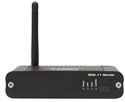
The Wireless USB 2.0 Extender (Extender for short, as I don’t want to type that long name again and again) is actually two devices; the first is a Wi-Fi transmitter that sends the USB signals. The second is an 802.11 receiver that receives the Wi-Fi signal, and send data via USB to up to four USB devices.

The transmitter and receiver were both small boxes, each with with a small antenna. Both are solidly constructed. No additional software was needed. That’s a plus!

Installation was mostly straightforward:

1) Connect the transmitter to the Macintosh with the supplied USB cable/ Plug the transmitter into a power outlet with the wallwart power supply.
2) Plug the remote receiver into a power outlet with the wallwart power supply.
3) Connect the USB accessory you wish to use to the receiver’s USB port.

Gefen’s manual was rather skimpy, given that this is a $400 device. One common pitfall of having multiple wireless transmitters on the same network is channel interference. Fortunately, we did not have to switch 802.11 channels, as the Extender’s default channel did not conflict with our Apple Airport Extreme’s, but if it had conflicted, the manual’s instructions would have been rather cryptic for a networking newbie to follow. Better instructions, please!

Initially, the Macintosh did not recognize the Extender’s transmitter. According to the manual, rebooting is not required after connecting the transmitter. However, we had to reboot to get the Mac to see the Extender transmitter, which should be recognized as a USB High-speed hub by the Apple System Profiler application.

Our first USB victim was an HP PhotoSmart 7280 All-In-One printer/scanner/copier. The receiver was located about 15 feet from the transmitter.

Fellow tester John Nemo and I thought the wireless gods were smiling on us when the first test page printed flawlessly, and in short order. But we were disappointed and confused when subsequent print jobs failed. Rebooting would get another print job accomplished, but each succeeding print attempt failed.

We suspected printer driver problems due to the slower data transmission rate via the Extender than direct USB. HP’s driver’s -are- notable touchy.

Scanning performance via the Extender was very slow, but functional.

After our disappointing experience with the HP, we went with our fallback printer, a Brother HL-2040 USB laser printer. I’ve used this cheapie printer for over a year, and it is bulletproof. Two words describe it: fast and cheap. Print quality is not bad, either.

The Extender and the HL-2040 cooperated perfectly. Printing was almost as fast as direct USB connection.

After this successful test, we moved the HL-2040 to another room about 35 feet away, with two thick masonry walls between the transmitter and the receiver. Performance was slower, with the print job taking almost twice as long to spool, but it did complete perfectly.

Don’t think the Extender is going to reduce your cable count. The transmitter and receiver each need a wallwart power supply, in addition to the USB cable at each end, so you end up with more total cable clutter, even though remote devices are out of the room. Whatever is connected to the receiver will need its own AC socket, so make sure you’ve plenty of power outlets handy.

So, how much do you want to spend to move USB peripherals (probably printers) to other rooms, to make it easier to share them? Do you want to spend $400?

Alternative (and cheaper) wireless solutions include printer sharing from an Apple Airport base station. However, the Airport Base station solution can only accommodate one printer. The Extender can handle up to four USB devices simultaneously.

Conclusion

The Gefen Wireless 2.0 USB Extender (4 port) worked as advertised, although we had trouble printing to an HP PhotoSmart 7280. The manual needs a a rewrite by a good tech writer, and should be printed on glossy stock with better graphics. As The Extender is costly, no doubt a about it. If you need more than what Apple’s printer sharing via Airport can provide, look into this unit. Don’t expect full performance for remote scanning, and be aware that we had issues printing to HP multi-function printers. Plain-vanilla USB printers worked very well.

MyMac rating 3.5 out of 5


Mojo Courier 17″ Computer Case – Review

On October 30, 2007, in Uncategorized, by John Nemerovski

Mojo Courier 17″ Computer Case

SpireUSA

http://www.spireusa.com/products/MJ8.htm

$100 US

The Mojo laptop case by SpireUSA is designed for couriers, bicycle messengers, and active commuters or students with strong shoulders. This bag’s many pockets are deep, but yours don’t need to be in order to purchase this spacious case suitable for 17″ and smaller laptop computers.

Here is the full list of the Mojo’s specs, provided by the company:

  • TripleShock™ padding system
  • Mesh water bottle pocket
  • Beefy 2″ single-buckle closure
  • Die-cut reflective ovals
  • Multiple internal and external pockets
  • Pass-through for rolling luggage handle
  • Removable key fob
  • MP3 pocket with headphone grommet
  • Padded handle with anti-sag reinforcement
  • Removable waist strap
  • Glow-in-the-dark zipper pulls
  • Rugged 1680D Ballistic nylon exterior
  • Light gray interior
  • Asymmetrical shoulder strap pad
  • Lifetime warranty against defects

2008 Mojo Specs

Product Code

MJ8

Price

$100.00

Laptop Compartment

15.75″ x 11.5″ x 2.0″

External Dims

17.5″ x 13.0″ x 6.0″

Capacity

1360 Cubic Inches

Weight

2.6 Lbs

External Fabric

1680 Denier Ballistic Nylon

External Pockets

6

Internal Pockets

4 (+ 2 Pen Pockets)

Padded Handle

Yes

Padded Shoulder Strap

Yes

Removable Waist Strap

Yes

* * * * *

In our conversation with SpireUSA, we learned their design/production team emphasizes:

• The mesh water bottle pocket. Most people want this feature but many laptop bags do not have it.

• “TripleShock” foam padding in the bottom, with three layers of foam in the bottom to protect the laptop. There’s a thick removable foam pad, plus the padding in the laptop compartment, plus padding built into the bottom of the bag. The Mojo’s built-in padding is only under the laptop compartment. Many bags will just run the foam across the entire bottom, where you don’t need it. Who needs padding for their books? Spire’s padding system reduces bulk and weight, and is flexible. If you get a larger laptop, you can remove the foam rectangle from the bottom for more space.

• Reflective ovals for nighttime visibility and styling. 

• Asymmetrical shoulder strap pad, half of which is curved for comfort when the bag is slung across your body.

• The bag is designed to be water resistant, so in normal weather conditions (light rain/snow) it does just fine. However, like most bags, it is not designed to be to be waterproof. 

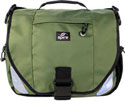
• Three subdued colors that don’t draw too much attention to themselves. The green color of our evaluation case is turning out to be very popular. The other two are dark blue and all-black.

* * * * *

I filled a green Mojo with as much gear as I could carry, and used it as my workhorse case for laptop + accessories during our review period. My thoughts are:

The Mojo’s CARRYING HANDLE is not comfortable enough for extensive carrying of a heavy bag in briefcase mode. This would be a deal breaker for me, and I urge the company to create a superior handle. I’ll gladly test all prototypes.

QUALITY OF CONSTRUCTION is first rate throughout, and will allow a Mojo to be in active service much longer than any laptop it carries.

SIDE POUCHES for water bottle and iPod are genuine assets, and I can’t live without them.

Internal and external SLIP-IN POUCHES are numerous, but their loose, open-top design is really annoying.

LAPTOP SECURITY AND STABILITY are fine. No margin for error in this matter. How about an extra inch of Velcro?

RAIN PROTECTION is inadequate. Either do it fully or leave it out.

SHOULDER STRAP, WAIST BAND, and ROLLING SUITCASE PASS-THROUGH are excellent.

The oversized front MULTIPURPOSE COMPARTMENT is enormous, which is consistent with the capacity of Spire’s TORQ backpack reviewed here.


Vertical photo of SpireUSA’s Mojo case, containing two computers, water bottle, software box, digital camera, portable hard drive, and bag of apples. The case was heavy, but there was still a lot of room for more accessories.

Additional SAMPLE PHOTOS are very instructive, located by clicking on the “Images” tab at this web site.

* * * * *

Let’s hear from David Weeks. In real life he’s an airline pilot, with high-usage demands on any case for his MacBook Pro. He loaded up Mojo, and I took notes while he evaluated the case. 

David says:

The Mojo’s handle is nice, Nemo, and its big, wide strap can take a lot a weight. There’s a neat, zippered rear pouch that will fit over a rolling suitcase, but if this rear pouch is meant to hold anything, it won’t do that very well. Without any velcro or upper zipper it’s too easy for stuff to auto-eject. I don’t like a snap clasp on the bottom front, because I prefer computer access directly from the top.

The front pocket is okay, but too narrow for such a large front flap. I don’t personally use foldover tops, because then I need room behind the case to fold back the top for access to my gear. But I do like the slots under the front cover for pens and pencils. 

I like the inner computer compartment. It has plenty of room for my 15″ MacBook Pro, even when its Case-Mate handle is attached. The Mojo’s big inside zippered pockets have lots of room, but no elastic tops or ways to close them. I’m also concerned something will fall out from open slot mini compartments

Spire’s Mojo’s top draw strap too easily finds its way into the zipper, which is clumsy. There’s a nice clip-removable key fob, plus a small side “iPod” pocket with a hole for headphone cable but no controls. This is an okay idea, but I’m not sure how practical it would be for me.

A messenger can carry a lot of stuff in this Mojo, but the case is not designed for the traveling business person or airline pilot. It has lots of storage space, which is not especially well secured. 

Ergonomics are decent for biking or commuting. The rear cinch buckle strap will help you rappel down the north face of K2, and it’s good for bike riders to keep from shifting.

* * * * *

We understand airline pilots  are not the Mojo’s designated drivers. Spire’s representative tells MyMac.com:

“The bag is designed to be carried primarily on the shoulder, not by the handle. Many courier/messenger bags do not even have a handle! I agree the handle could be beefed up in the future. We’ll certainly take a look at this for the next version of the bag.

“The rear pocket is for magazines/newspapers. We had considered putting a Velcro closure on this pocket, but I decided the no-Velcro ease of access outweighed any risk of the magazines falling out. Personally I have not had a problem with magazines falling out of it. If the bag is empty this may happen more because there isn’t any tension on the pocket. But usually when you carry the bag around, it’s going to be full of something.

“The size of the front pocket is something people will be split on. The bag that preceded the Mojo had a larger front pocket, which some people like. We made it smaller because usually you’re going to put something small in it — keys, chapstick, loose change, etc. So fishing around for these items in a large pocket, especially one that extends across the whole flap, is less convenient. Depends on what you carry I guess.

“Same thing goes for the open-top pockets…it depends on what you carry. I use the external pockets for my checkbook and sunglasses. They don’t fall out. I don’t carry my cell phone or Nano in these pockets, I use the side (zippered) pocket because it is more secure. I do agree that it would be useful to have Velcro on at least one of them though.”

* * * * *

Overall, the Mojo by SpireUSA has an equal balance of raves and gripes from MyMac.com.

David Weeks and John Nemo rate Spire’s Mojo at 3.5 out of 5, for the target audience. 


Take Control of Upgrading to Leopard: Early-Bird Edition
Company: TidBits TakeControl Ebooks

Price: $10.00
http://www.takecontrolbooks.com/default.html

Leopard is coming… are you ready? I know, you’ve been through this before, you’re a power user, know all the tricks that go along with upgrading to Apple’s newest OS… Or you could be a brand new user or ex-Window’s user who’s not really sure what to expect. Well, the crew at TidBits has taken a bite of the process of upgrading and it presents itself in Joe Kissel’s latest endeavor, Take Control of Upgrading to Leopard: Early Bird Edition.

This 60-page pre-release work prepares you to take the next step in upgrading your Mac to the newest and the best operating system out there. Kissel starts you off where you should start.. is your Mac ready to run Leopard? He then takes you through backing up your Mac, cleaning out your Mac, and whether you should consider partitioning your hard drive and maybe do away with OS 9 for good, if you already haven’t. Maybe it’s also time to onsider the options; is it time to finally upgrade your Mac to a new model if you can afford it?

Kissel does a great job of explaining the importance of backing up your hard drive and provides the reader with a breakdown of options that are available to do so. He even goes into the procedures for those Mac users who have Windows running on their machines. Running Apple’s Hardware test, Disk Utility and commercial software options are also covered. Kissel is straight- forward in going through the proper steps in getting things together to cause you the least amount of problems or issues once you have decided to upgrade to Leopard.

There is another nice thing about this TakeControl Ebook. On the front cover is a link that will take you to the Ebook home page where after Apple officially releases Leopard, you just click and you’ll be able to download the full complete version of the book with all the latest updates and adjustments that have become available. The web page itself is a great source of information as it is updating information that is in the pre-release to make sure that readers are kept abreast of what is going on. Another great asset in the book is that pages 50-54 provide links to software, drivers and firmware to make sure that you have everything you need to get the job done.

And let’s be honest about this… 10 dollars US is a small price to pay for good information that will save you lots of time, effort and headaches if things go wrong in your updating process because you overlooked something that you should have done beforehand.

So to review:

Pro: Well-written book that not only covers what you should do to prepare your Mac for Leopard but what you should do any time you go to upgrade/update your Mac.
Cons: None that I could find.

Highly recommended!

My Mac rating: 5 out of 5.

Tagged with:  


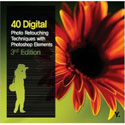
40 Digital Photo Retouching Techniques, 3rd Edition
by Zack Lee

Youngjin Publishers
http://www.yougjin.com
ISBN-13: 978-89-314-3370-8
198 pages, full color
US: $16.95 CAN: $22.95 UK: £9.99

In the age of digital photography, with the right image adjustment techniques, we can look younger, older, and sometimes more attractive. If taking off a few pounds seems impossible in real life, it can at least be done with the magic digital image retouching. Just last week, one of my clients called me and said she really liked a particular engagement photo of her and her fiancé, but she was wondering if I could somehow get rid of her double chin. I was happy to oblige. I could retouch the image in Photoshop in under five minutes, no sweat.

While image retouching might seem like a daunting task, it can be learned and applied with practice. The third edition of Zack Lee’s 40 Digital Photo Retouching Techniques does just that. It demonstrates in easy to follow steps how to use any version of Photoshop Elements or Photoshop CS to retouch or fix good or not so good images. All the techniques are for both beginning and intermediate Photoshop users.

The first technique presented in book addresses a common problem of under- or overexposed images. The technique involves using the dialog box of Photoshop’s histogram to get an idea of which parts of the image need to be adjusted for correcting the tone of the image. However, for some odd reason, the author doesn’t follow up this image tone analysis technique with instructions about how to actually make tonal corrections. Using Photoshop’s curve, levels, or even Brightness/Contrast controls could help correct over- or underexposed images, but the author doesn’t include instructions for how that is done. I’m not sure why.

Lee does present, however, a number of very good and straight techniques that can be applied to almost any photo. These techniques include:

-Correcting blurred images
-Correcting backlighting
-Brighting specific spots in an image
-Turning color photos into Black-and-White photographs
-Making detailed color changes
-Removing facial blemishes
-Opening closed eyes
-Adding a picture frame
-Combining images
-Opening and processing a camera raw image file
-Stitching panoramas
-Adding motion blur
-Making a greeting card
-Making a web banner and a web photo gallery

As you can see, several of the techniques included in this book don’t necessarily have anything to do with retouching an image. So if you’re looking for a book with more advance or in depth techniques, this one might not be useful in that regard.

The books does come with a CD that includes a trial version of Photoshop Elements 5.0 and a copy of the images used in the book so that you can follow along with the instructions.

For any serious digital photographer, being able to retouch photos doesn’t have to be a major challenge. With the techniques you learn from this or other similar books and a little practice, retouching photos can be both fun for you the digital photographers and often pleasing for the subjects of your subjects of your photos. Who wouldn’t want to have a few wrinkles or blemishes taken out, the red in their eyes removed, or a little makeup added for cosmetic purposes?

40 Digital Photo Retouching Techniques doesn’t show you everything you need to know about image retouching, but it’s a pretty good introduction to the subject.

MyMac.com rating: 4 out of 5


Using iWeb 08 – Part 3

On October 29, 2007, in Uncategorized, by Guy Serle


Inspecting the Inspector (expect the unexpected)

One part of iWeb that you’ll get to know very well is the “Inspector” window. This box is what makes almost all the changes behind the scenes. iWeb relies on this box and its sub-windows for almost everything you’ll need to do beyond dragging and dropping graphics and text boxes. So let’s talk a bit about the Inspector. Please note that the Inspector I’m talking about is the one for iWeb 2 (part of the aforementioned iLife 08) which added a few tricks not available in iWeb 1 (iLife 06).

The Inspector window has several tabs on it, each which performs various tasks. You can bring it up (if it isn’t already there) by using a menu command or by hitting the “Inspector” icon at the bottom of your site window.

Site Tab and Site
The first tab is the “Site” tab. This has two buttons on it; “Site” and “Password”. Under the Site button, you can name (or rename) your site, publish your site to a group, enter your email address, and see how much room is left in your “.mac” iDisk account.

Password
The Password button allows you to make your site private by adding one (and only one) name and password for access. It tells you not to use your .mac password and this is probably a good idea. The two most important parts here are your site name and your email address. Your site name is what will be listed when you upload it to your “.mac” account or publish the site to a folder. Your email address is the one that will be used if you use the “Send Email” icon anywhere on your site. You can naturally use whatever icon or text that you wish and have it link to the email address (or addresses) of your choice, but using the iWeb email icon makes it very simple and it’s one less thing to think about.

Page Tab
The second tab is the “Page” tab. Like the Site tab, it has two buttons on it labeled “Page” and “Layout” The Page button has a field to name each page in your site and whether or not you want it show up in iWeb’s default navigation bar. If you’re making your own navigation window (which I’ll tell you how to do later), uncheck it for each page. Under the Layout button, you can determine the width and height of the page along with the height for your header and footer.

With Layout, you can also select a background color for the page (including gradients which can look pretty cool) or choose an image. Choosing a color will bring up a different window with several different options for choosing colors. While you can choose between millions of different shades, the best bet is to select the simple crayons or web safe color icon at the top. Choosing an image gives you several other options including tiling (if the graphic doesn’t fill the page, it will be repeated until it does) or stretching (which will distort the image which can have its own pluses or minuses). Remember that iWeb does not make any changes to the image itself, so you may want to open it in a graphics program to reduce its opacity to more easily allow the rest of your content to show up without distractions. The last option here is the Browser background color which adds whatever color you choose to any overlap in size between the pages you’ve created and the actual browser window as selected by whoever is viewing your site.

Photos Tab
The third tab is the “Photos” tab. Going with three for three, it also has two buttons, “Photos” and “Sideshow”. The first button (Photos) allows you to select your photo file size…kinda. The only real choice you have is whether or not you want the photos to be small (allowing for faster downloads with some degradation of picture quality) or a few choices up to and including full size. This is also the first instance of where you run into Apple’s way of allowing for others to be notified when you’ve made changes on your photo pages by allowing them to subscribe to your site with RSS (Real Simple Syndication). If you say yes, then a small icon is put on your photo pages that a subscriber can hit and he or she will be notified in their browser bookmarks when new stuff appears. Maybe. If the person that wants to subscribe uses a Mac, then no real problem. The two most popular browsers for the Mac (FireFox and Safari) both support RSS and will drop a notice to you the next time you use them. Windows users using FireFox should also have little to no problem. Internet Explorer users MAY have a little problem using the stock version of IE before version 7. Those people will need a dedicated RSS Reader to keep up with your site.

Back on topic, this tab also is where you allow or disallow anyone from making comments on your pics of your Aunt Betty at the last family reunion (or whatever). The comments do not show up on Photo or Album pages, just when you select individual pictures. These seems a little weak to me and not particularly well thought out and awkward. You can also allow attachments (perhaps other people posting pictures of their own on your site), but this makes me nervous and I’m not going to do it until I get it a bit more figured out on the security end of it. Both the “Photos” and “Albums” iWeb pages use these settings.

The second button is the “Slideshow” one. If you hit the checkbox that says “Enable Slideshow”, you can determine what transitions will occur in between each photo when the visitors to your site hit the “Play Slideshow” icon in any photo page. If you have played around with iMovie, you’ve seen these transitions before. Which one you choose is a matter of taste. You can’t determine how long each image will be onscreen before the next picture blasts its way into the foreground however. Other selections here include “Show Reflection (a slightly faded mirror image of the photo)”, “Show Captions (your titles for each image)”, and “Full Screen (whether or not you want your images to show in…um…full screen)”.

Blog and Podcast Tab
The fourth tab is the one to set some of your RSS (as said before Real Simple Syndication) settings. If you look at the default “Blog” and “Podcast” pages, they are remarkably similar. Each has a “Main page”, an “Excerpts” (or posts) page, and an “Archive” page. I’ll go into more detail later, but here is a brief description of these three pages. The Main page is the page that you can give a description of what the viewer will typically find in your blogs or podcasts and this is also where iWeb puts the RSS badge for your content. The Excerpts page is where you’ll actually create your content and the Archives page is where someone can go to look at all your past submissions.

Under the Inspector, you have two buttons to choose from yet again. The “Blog” button (which also works the same for podcasts) has settings for how many excerpts you want to show and how long they will be on the opening or main page for your blogs or podcasts (the default being 5), whether or not to allow comments or attachments, and whether or to display a “Search” field. The Search field isn’t a connection back to the web for Google, it only searches your site. The “Podcast” button allows you to enter the name (typically your own) of the podcast series creator, a contact email, whether or not you want to set a overall parental advisory for your podcasts, and asks you if you want to be able to post it in the iTunes Music store (.mac only). Each podcast created can be attributed to an “Artist” and have a Parental Advisory of its own and it again allows you to include it or not at the iTunes store.

Text Tab
Next on the Inspector hit parade is the “Text” icon. It should probably come as no surprise that this icon is mostly dealing with the written word as created for your site, though it does do a few other things as well. All text created for an iWeb site must be within a text box. How that text in those boxes look is determined here. You can change some other things about the box itself elsewhere. Don’t worry, we’ll get to it later (tired of me saying this yet?) Breaking ALL the rules so far, this part of the Inspector has not two, but three buttons.

The first button is simply labeled “Text”. From here you can change the color of the text itself, if you want it left, center or right aligned, and what color if any you want the background filled for the text box. The controls for spacing your text are also here and what kind of margins you want to choose. These are a matter of taste, so when you start to actually create your site, play with them to your heart’s content.

The next button is called “Wrap”. You can insert a graphic into a text box (explained later) and decide if you want the text within the box to flow to the left or the right of this graphic and how many spaces there will be between the graphic and your text.

The last button here is labeled “List”. If you’re a big fan of creating lists, you will love this section. Here you can choose what bullets or numbering you want, or even select a different graphic of your own. Align the bullets and resize them however you desire and even scale it. The bullet and text indent controls are here as well.

Graphics Tab
This next one is a personal favorite. It’s the “Graphic” icon. It’s a bit misleading as far as the title goes because the functions here work with more than just graphics, but text as well. So, as I’m explaining these, don’t just see them in relationship to pictures, but individual words and text boxes as well. This really swells up the kinds of effects you can easily do in iWeb. OK, no more cheerleading, let’s talk about what it does.

The top uppermost section has your “Fill” functions. Solid colors, gradients, and a few other tricks live here. Change their orientation at 90 degrees a push in either direction or use the “Angle” spin wheel for a little more control. Keep in mind that the spin wheel doesn’t change the orientation of the box, just what images or colors you’ve placed inside.

The next section is for unknown reason called “Stroke”. I guess calling it Frame wasn’t sexy enough for Apple. No matter, adding a frame to a text, picture, or graphic box is what this does. Choose from a few different types; change the color of the frame and even its pixel size from right here.

This is followed by ”Shadow”. It does what you might expect by adding a drop shadow behind whatever type of box you might have on your page. Change the color, the angle of the shadow, its offset, blur, and opacity all with a few clicks. You can also have it be a reflection of itself instead of a shadow.

Last bit is overall opacity. Maybe you want the image or text dimmed to allow for something else to shine on top of it. This is where you can do this. These easy to use controls really give you a lot of options for page layout, especially if you’re trying to get away from the standard Apple iWeb templates.


Next time we’ll look at the rest of the Inspector Windows and I promise right after that we’ll make some web pages.


MyMac Podcast 151 – Leopard

On October 27, 2007, in Uncategorized, by MyMac PodCast

Download the show here, in iTunes, or listen above

A special weekend edition of the podcast looking at Leopard. First up, Tim talks about installing the new Mac OS on both his G5 and Macbook Pro machines. Robert chimes in from his cell phone twice, once about buying Leopard, and again with his first impressions after installing it on an older iBook G4. Finally, John Nemo records four interviews from the Apple store, a really fun segment!

We would LOVE some of your feedback on Leopard. Send us an email here, or simply call 1-801-938-5559 and leave a message.


Subscribe to us in iTunes
.


Leopard Arrived

On October 26, 2007, in Original Blog, by Russ Walkowich

I’m been home sick for the past few days, whatever is going around came to visit me. So this morning, when the FedEx guy arrived at 9:32 am with a little bundle of joy, Mac OS 10.5, it kinda cheered me up.

The Good News… Leopard is here!
The Bad News… Leopard is here!

Background- I’m running a G4 PowerMac MDD 867 Dual, with 1.5 gigs of ram. (Yes, I know, I just made it) I prepared for Leopard by removing one of the old internal hard drives that I had 10.3.9 and OS 9 on, and added a WD 160 gig hard drive. I started the installation at 10:32 am and it finished at 11:31 am. (of course the last 9 minutes were shown as “less than 1 minute remaining.”

Restart, starts up, looks good… transfer all info and apps over from the primary HD and then things start to get a bit strange. Click on System Prefs in the dock and the beach ball appears… and spins and spins and spins. Finally, Force Quit.. several times to get it to do so. Right click on the desktop to change the desktop background and … nothing.

Ok, let’s try Disk Utility and have it Repair permissions.. click on it and 10 minutes later, the barber pole is still rotating. Ok, enough’s enough. Put the install DVD back in, restart and select Utilities. Click on Verify Disk, it does so, then click on “repair” and it tells me the “Disk could not be unmounted.” Click again and it goes through the process, no repairs needed.

Click on Repair Permissions… and the barber pole starts and keeps on going, 10 minutes, 15 minutes… time to quit out. Restart computer selecting the HD with Leopard on it. Starts up, able to change background picture, begin to check out things… Like the look of Mail, (version 3.0 (912.1/912); Safari 3.0.4 (5523.10) and what ever else I’m opening up. Oh, yeah, click on Software Update… you guessed it, spinning beach ball, doesn’t want to quit when told…

I really like the look of Leopard, the changes to the way folders display contents as a fan spread and I’m continuing to explore. Will get back and let you know how things proceed with repairing permissions and any other issues that may arise.

Enjoy!

Tagged with:  

MyMac Podcast 150 Waiting for Leopard

On October 26, 2007, in Uncategorized, by MyMac PodCast

Download the show here, rock with iTunes there, or jam above.
By the time you listen to this, Leopard will be out in the wild, possibly even on your hard drive running your Mac. But when we recorded this two days prior to the launch, Tim Robertson, Donny Yankellow, and Rich Lefko were left asking questions and talking about what they were most looking forward to.

As always, we would love to have some feedback. Send us an email here, or simply call 1-801-938-5559 and leave a message.


Subscribe to us in iTunes
.


Tim Robertson reviews both the iPhone Silicone Case from USBFever.com and the Jam Jacket for iPhone DLO.com.

Watch the YouTube (kinda crappy) version above, or CLICK HERE for much better quality MP4 video.


Pixelmator – Review

On October 24, 2007, in Uncategorized, by Donny Yankellow


Pixelmator
Company: Pixelmator Team

Price: $59.00 (US)
http://www.pixelmator.com

If you are a regular reader of Mac websites and a listener to different Mac podcasts, you’ve probably heard of Pixelmator. Pixelmator is a new image editing program by Saulius and Aidas Dailde – two brothers that make up the Pixelmator Team. I’ve had the opportunity to try out Pixelmator for a while now (I was allowed to try the beta version), and if you are looking for an inexpensive image editor, Pixelmator is worth a try.

When you first open Pixelmator, you might think Photoshop, but a more fun looking Photoshop. You have a toolbar, a layers window, swatches, a color picker just like you do in Photoshop, except Pixelmator gives it a more Mac look. In fact, Photoshop and Photoshop Elements users will have no problem learning Pixelmator.

The Toolbar has all of the basic tools you would expect: lasso, magic wand, select box, pencil, brush, fill, gradient, eraser, clone, etc. There is your foreground and background color switcher, and the magnifying glass. There is even a button to click for a full screen mode. All of the tool act as you would expect them to act. The fun part of the toolbar is that the icons enlarge when a tool is selected. This is a nice touch.


Pixelmator also has all of the basic image editing settings you would expect: brightness and contrast, levels, scale, posterize, rotate, saturation, etc. Photoshop users will find these settings in the same menus you are used, too. As I said earlier, an easy transition from one program to the other.

Filters are also present. The basics like sharpens, blurs, and others are present. There are also some unique Pixelmator effects (seen in the image below). These include halos, stripes, checkerboards, page curls, and more. The blue bar on the left of the image is the "Copy Machine" transition. You can even activate many of these features through Automator actions.


One of my favorite features is the Photo Browser. Similar to iWeb or iMovie, Pixelmator allows you to browse your iPhoto library and your Pictures folder for images you want to edit in the "Photo Browser". Double clicking the image you want opens it in Pixelmator. I am always opening images from iPhoto for editing, and this is a great feature. If you want to make a self portrait, Pixelmator is iSight compatible. Take your picture and send it straight to Pixelmator through the Layers menu.


Speaking of files, Pixelmator is compatible with over one hundred file formats, including Photoshop PSD files. However, while it opens PSD files, and imports layers from Photoshop files, effects applied with Photoshop’s “Blending Options” for individual layers did not import.

The above mentioned problem is the only problem I encountered while using Pixelmator, and while writing this review an update with numerous fixes was released (this issue was not). While that was my only problem, there are a couple of features I’d like to see in a future update. First (and second, I guess), there are no grids or rulers. I use rulers all of the time when I work on an image, and grids go hand in hand with rulers. Third, as you might be able to see in my images, the Pixelmator palettes are transparent. This looks good at first, but I’d prefer the ability to make them opaque. A busy background can become annoying through the transparencies. A preference option would be great for this.

Even with the above issues, Pixelmator is a great program that is loaded with features (for a comprehensive list go here: http://www.pixelmator.com/specs/). For $59, it is cheaper than Photoshop Elements, and well worth the money. You can’t find a cheaper image editor that can do all that Pixelmator can do. If you are looking for a Photoshop-like image editor without the Photoshop price, I highly recommend going over to the Pixelmator website and downloading the demo, and/or purchasing this program.

I look forward to future updates and releases, as Pixelmator grows from what is a great start.

MyMac.com Rating 4 out of 5


Shure SE 110 Sound Isolating Earphones – Review

On October 22, 2007, in Uncategorized, by Artie Alinikoff


SHURE SE 110 ISOLATING EARPHONES
Company: SHURE INC.

PRICE: $119.99 MSRP
www.shure.com

The business of sound reproduction never sleeps. R&D departments are working overtime for your attention, and your money. With the advent and proliferation of so many portable music players, music listening has taken on a life of its own. On any given day one can see people listening while: walking, running, skateboarding, in-line skating, ice skating, skiing, bicycling, weight lifting, relaxing, riding the bus, and on and on. There is almost no activity left which cannot be supplemented with your "fave raves" (music).

Shure, makers of quality sound products such as microphones, and the subject at hand, has yet another offering designed to titillate your sonic fancy: The newly released SE110 Sound isolating Earphones ("Developed for THE PROS" is stamped on the box).

First let me complement Shure for making this product infinitely easier to access from its plastic cocoon. Thanks Shure. They must have read my previous review on their SE 210′s and 310′s. The company simply packaged the set with two pieces of plastic which fit into (and slide away from) each other.

Again, this unit comes with a short chord, about 18", attached and sealed to the buds. Have no fear. Shure has included with its fit kit an extension which should give the user plenty of latitude. My guess is that Shure knows that lots of users will place their iPods or MP3 players in their shirt pocket close to their head. Why have a management problem with excess chord when unnecessary? The included extension solves more lengthy proximity issues.

Also included in the fit kit are five extra sound isolating sleeves, six all together including the ones already attached to the buds. It’s up to the user to find the one which works the best for them. They should fit snugly, but not too tight, and should allow the user to experience good sound isolation from the outside while experiencing all the sonic attributes your player can muster.

I switch on my iPod and cue up "Get Back" from the Beatles new release, "Love." I went downstairs to get my Ultraphones, a set of sound isolating headphones which fit over the ears and cuts about 25 db from the room. These I use for practicing the drums, and for studio work. Because these phones isolate so much of the room sound when I’m in a recording session I want to hear what my drums sound like coming from the board and in relationship to the rest of the musicians on the track. They do a great job. But is it fair to compare these two different animals. After all, the Ultraphones go over the ears, and the SE110′s go into the ears.

But hey, sound isolation is sound isolation. So here it is.

The Ultraphones blocked a lot more of the room sounds—better isolation—but had none of the crystalline highs and mids that the SE110′s had. On the song "Get Back" the SE110′s caught the jangling guitars and even the value of the reverb used on the vocals. I could hear the Ringo’s "train beat" clearly and the cymbal splashes with the guitar echoing the title line.

But where was the bass? Not a whole lot there, I’m afraid. Hey, let’s switch tunes and try something else.

To Bonnie Bramlett’s latest, "Roots, Blues, and Jazz." On the opening track, "Love the One You’re With," we get a great studio band playing a pithy arrangement of this old Steven Stills classic. Lot’s of good playing here with very clear instrumentation.

Okay, there’s the bass. but still not very present. If I push the buds gently in a bit the bass springs to life. The mids are a little thin and the highs are crisp. This, I believe, is the way these are supposed to sound. But I’ll be damned if I can get these buds in position in MY ears so I can get all of the sound without holding them in with my fingers.

This is what I don’t like about ear buds, as opposed to over the ear phones. Yeah, earbuds are way more convenient and easy to carry and store. But they never seem to fit my ear properly. I tried all of the sleeves and this is the best I can do. If I’m placing them in my ears improperly then I’m an idiot. If not, then they’re not doing their job.

It seems that Shure is trying to capture a market of medium range users of audio equipment. By this I mean that their SE line of earphones are priced anywhere from $119.99 up to $499.99 for the SE530′s. This ain’t cheap, folks. Even at the low end of this scale for over a hundred bucks I’d better be getting something tangible I can love. But with this new SE110, I’m not feeling the love.

I’ve listened to this set now for about half an hour on different tunes and styles. There just isn’t enough there to justify the price, even though I know that Shure puts its heart and soul into the making of their products. I’m sure all the components in this set are quality and they’ll last. But when you’ve got any number of sets out in the market for half the money doing about the same thing, quality aside, the sound simply does not justify the price.

MyMac Rating: 2 out of 5


Weekend Archive – Apple, it

On October 21, 2007, in Uncategorized, by MyMac Administrator


Over three years ago, Bruce Black was calling for a multi-button Apple supplied mouse. This article could have been written today!


MyMac Podcast 149 with Beth Lock and John Farr

On October 19, 2007, in Uncategorized, by MyMac PodCast

Download the show here, rock with iTunes there, or jam above.
This week is a can’t miss episode with special guests John Farr and Beth Lock. These two have penned some of the best Mac and non-Mac columns, and Tim, Guy, and Chad talk them up for over an hour. One of the hosts favorite shows to date! Plus, David Cohen’s Fenestration, reader email, and Tim gets the Darth back in his iPhone.

As always, we would love to have some feedback. Send us an email here, or simply call 1-801-938-5559 and leave a message.


Subscribe to us in iTunes
.


Data Backup 3.0 – Review

On October 18, 2007, in Uncategorized, by Larry Grinnell


Data Backup 3.0
Company: Prosoft Engineering

Price: $59.00 (US)
http://www.prosoftengineering.com

Everyone hates doing backups. I know I do. Like most utility software packages, products like this are ignored until it is too late, and your precious data is gone. It’s funny how diligent I was at work (I suppose my job being at stake had something to do with it…), yet I almost never backed up anything at home. I’ve been playing the odds for a lot of years, and have so far been pretty lucky.

The reality is that because nothing has happened, you get lulled into a false sense of security. When it finally does happen (drive crash, deleted a vital file, etc.), the cries of anguish are deafening. Again, it’s never happened to me, but that doesn’t mean it won’t at the most inopportune moment possible, because that’s how these things go. That’s why I urge all of you out there in internetland to get yourself some backup software and one of those amazingly cheap external hard drives. There has never been a better time to buy one of these USB 2.0 packages of storage goodness. When you can by a 500 gigabyte drive (that’s half a terabyte!) for under $125.00, and 120 giggers for around 50 bucks, there’s absolutely no reason in the world not to embark on a solid backup plan right this very minute. Can’t afford an external drive even at these prices? Most of your Macs probably have a CD and maybe even a DVD burner. A CD burner can put up to 700 megabytes on a disk, and a DVD burner, around 4.5 gigabytes (almost 9 GB on the double-layer disks). You know, these nice internal and external hard drives are coming down in price for a reason–they’re built more cheaply, and are likely to fail more unpredictably than drives of the past. It might last 20 years, or it might go out in a blaze of glory tomorrow.

Data Backup 3.0 from Prosoft Engineering is a terrific backup program. It supports nearly every kind of media: CD, DVD, hard drives, network drives, and I’m sure even more. It’s a real bargain at $59.00.

Installation is a breeze. It uses Apple’s "package" method of installation. Just double-click the Data Backup.pkg file, answer a few questions, and it installs in a flash.

Help comes in the form of a detailed and well-illustrated 45 page file that opens when you select Help from the Help menu.

I decided to use my dual 2.0 GHz G5 PowerMac tower as my test subject. It has the optional 400 GB drive, so there’s a lot to back up, though not as bad as it might seem, because I am not backing up the operating system or applications. I have the original media for those, so it seemed wasteful to back them up too, although you can if you want to.

That said, Data Backup 3.0 also gives you handy pre-written backup scripts so you can back up:


When you launch Data Backup 3.0, this is what the initial screen will look like, though without a volume name where you want to backup your files to.


Setup is pretty basic. I won’t dwell on the preferences, as you probably won’t need to go in there, and if you do, the Help file will guide you through what you might need to do.

If you want to keep things really simple, you won’t even need to do much more than what you see in this initial screen, except for one teeny little thing–you need to tell Data Backup 3.0 where you want your backed up files to go: disk, network drive, or CD/DVD.

If it’s a local disk or a network volume, go to the File>Set Default Destination menu item. I have chosen my external 500 gigabyte hard drive, originally named as 500 Gigger. Click the Select button and choose your drive. If you want to back up to a network volume, first you will need to mount your network volume as you normally would from the finder. It will show as an option when you click the Select button. When you have made your selection, click the Set button. The pull-down menu items under Quick Backup get named with your backup volume.


Now, it’s just a matter of selecting the Quick Backup option you want. In this example, I am backing up my User files. Select All User Files to /Volumes/500 Gigger, and click the Start Now button. That’s all there is to it. Really. It takes less time to just do it than it did to read the description. The screen below is what it looks like when the backup starts.


If you want to back up to CDs or DVDs, Data Backup 3.0 can do that, too, prompting you to insert a new disk when the one in the burner fills up. This is probably the best solution for files you really can’t afford to lose, so you can get them onto convenient media, and then move them to a safe place away from your computer (a fire- and theft-resistant safe, a safe deposit box, a data archival center, etc.). Sure, you can do this with external hard drives, but that gets a little more expensive. From the Quick Backup menu, make your backup choice: iPhoto or Document files to CD/DVD.


When you click the Start Now button, the screen below pops up, prompting you to insert a CD or DVD.


You can also schedule when you perform your backups. Click the Schedule (calendar) icon on the main screen. The first screen that appears the one you use to set selected dates for backups. You can also choose an interval (every n minutes, hours, days, or weeks), starting at a designated time, selected events (backup at system startup, or when a destination or source volume appears on the system), or simply which days of the week do you want to back up, at a given time. The more automatic you make things, the more likely you will be to actually use it.

There, easy to do backups that if you did nothing else, you would have safely preserved data from your system to a secondary storage place, so if the unthinkable happened, you’d still have your data.

But wait, there’s more! See that Show Backup Options triangle? That’s where the real power of Data Backup 3.0 is hidden. Basically, if you don’t need to do any more than what I described above, you don’t need to go into the options. If you’re like me, who has stuff stashed on multiple disks and maybe on network drives, and who knows what else, you will need this power.

Click the little triangle next to Show Backup Options and you will see what I mean.

In this window, you can choose more data sources to back up by clicking the "+" symbol in the Sources part of this window. It permits you to select complete volumes or just some folders on different volumes, or maybe folders not stored within your /Users folder. You can also select multiple destinations for your backed up files by adding more volumes or folders to the Destination field. The Destination Type pull-down lets you select Volumes or CD/DVD for backups.

There are extensive "rules" that can be applied for backing up files, which can be found in the Rules tab (see above). Data Backup 3.0 is also scriptable, using Automator.

Data Backup 3.0 can compress your backup files to make room for more backups and other files on your backup volume, and if you have sensitive information, you can encrypt your backups. There have been a ton of articles in the paper lately about personal information getting disseminated because backup tapes were stolen, and they were not encrypted. Well, here’s your chance to protect your backup files (and maybe your job, if you are using this product for business). This program is so smart that a Preferences setting even automatically powers up your computer, performs the backup, and shuts it down again. Speaking of business (or for multi-computer families), Prosoft offers attractive multiuser licenses, too. Check out their product page at http://www.prosoftengineering.com/products/data_backup.php for complete pricing information.

With its default settings, a newer version of a file will overwrite the older version. In the Data Backup>Preferences menu, you can set Data Backup to perform more sophisticated Full/Incremental backups, where only the newer or replaced files are backed up, and older versions of files are retained in the backup archive. The Backup Type pull-down offers many backup methods: Simple Copy, Clone (make a bootable copy of your hard drive), Versioned, Full, Incremental, and Synchronize. Read the excellent online help manual for descriptions of each type and the advantages/disadvantages of each one. You can also download the version 2.1 manual at http://www.prosoftengineering.com/docs/DataBackupManual.pdf.

Depending upon how you configured your backup, restoration can be just as simple as dragging the contents of your backup drive back to your original drive. Otherwise, you can use the easy-to-use File>Restore feature to recover individual files or a complete volume, and if you do incremental backups, you can even restore your data to a specific date. I don’t mean to give this feature the short shrift, but you really need to try it for yourself to really appreciate how well it works in your own personal backup/restoration scenario. Again, read the online help file for complete details.

As much as I hate doing backups, this program is as powerful as anything out there, and I come from a strong Retrospect ((http://www.emcinsignia.com/products/smb/retroformac/)) background (I used Retrospect for 10 years in my office and never lost a file that was backed up, but if you want to buy a version of Retrospect that will back up to a network drive, or back up to one of the zillions of different types of tape drives still out there, it’ll set you back about 500 bucks). Data Backup 3.0 is strong, yet easy enough for me to set it, forget it, and perform my hated backups without having to think about it. I can’t imagine giving higher praise. Gee, about the only negatives I could come up with were that the manual posted to the website was the previous version, but the descriptions of types of backups and program fundamentals were mostly the same, so it isn’t a huge negative, and Data Backup 3.0 doesn’t back up to non-mainstream devices, but if you have specialized needs like that, you are probably already using Retrospect or something like it already.

MyMac.com Rating 4.5 out of 5


Other World Computing NASPerform Network Storage
500 GB Model reviewed

http://www.macsales.com
Price: $209.99

I was very excited to review this product. I’ve looked at network storage devices from afar, mostly because of price, and almost all of them were Windows based, but really thought they looked very useful. The OWC NASPerform (NP) utilizes NDAS technology allowing it to connect a storage device directly to a network with or without a server. The prices are pretty good at OWC, and our favorite computer platform is fully supported finally, so it was time for this Mac user to jump in. The acronym NDAS stands for Network Direct Attached Storage.

This drive can be used as either a stand-alone external drive, plugged directly into your Mac via USB, or as a network drive, plugged into your network via Ethernet. When using this drive as part of your network, you can connect either wireless, via a wireless router, or directly to a hard-wired Ethernet network. More on that later.

The drive and what’s in the box:
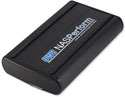
This drive is black and features a larger than average blue activity light on the bottom of the drive that folds around to the front. It pulsates lightly when the drive is being written to. Inside you’ll find a 7200RPM drive mechanism with a 16MB cache. On the back you’ll find a USB 2/1.1 port and an RJ-45 Ethernet port. Typical OWC/Newertech power supply and plug is included. You also get a full size (36”) USB 2/1.1 cable, plus an Ethernet cable (36”). You also get a disk that includes InTech SpeedTools Utility, and Prosoft Engineering Data Backup 3. On the HD itself you’ll find over 1.5GBs of freeware, shareware, and public domain software. A second disk contains the NP network software and documentation.

Setting up the drive
Usually, most of us geeks want to jump right in, by plugging in cables and powering the unit up to get it running as quickly as possible once we rip it out of the box. However, with this drive, that is not advisable.
First, it’s bad for the unit if you plug in Ethernet and USB at the same time. I’m not sure what will happen to the unit if you do, but I wouldn’t risk $200 by trying it. No, the first thing you need to do is install the NDAS software. It’s important that each computer that will access the drive installs the same version of the NDAS utility. The disk includes versions of the utility for OS X (10.2, 10.3, 10.4), and Windows.
The first thing I did was print out the quick start guide on the CD. I’m shocked after reading the system requirements which state “Macintosh, (Power PC based) desktop or notebook computer.” Intel based Macs not supported? What a disaster. I was hoping to connect this drive up to both my Intel MacBook and my Power PC based G5. I sent an email off to OWC tech support begging them to tell me it’s not true. While awaiting a response, I decide to load the NDAS driver utility onto my G5 and an older iMac. After loading the CD, I notice three folders, Windows, PowerPC AND Intel. A mistake in the documentation? An email from OWC confirms the documentation has been updated to remove the words “PowerPC only.”
Moving beyond this issue, I loaded up the NDAS utility on my G5 and my MacBook.
Meanwhile, I take the NDAS drive down to my basement and hook it into my network via the included Ethernet cable. I plug the unit directly into my Linksys wireless router, plug in the power, and fire the unit up. Note: Before doing any of this, you can, and probably should, plug the drive directly into your main computer via the USB connection, and format the drive based on your use, for Macs, Windows, or a mixed set up. The manual has a section that explains formatting and partitioning if that is the direction you’d like to go.

Using the NASPerform
The NDAS utility window is pretty simple to use. After the first launch you’ll need to enter the unit ID number and key, which is printed on the bottom of the enclosure. Give it a name, and you’re ready to use the drive. This is all done until the “General” tab.

Under the “Unit Device” tab there is a drop down window which gives you three choices, “Mount with Read-Only,” “Unmount,” or “Mount with Read-Write.”

If multiple Macs are connected to the drive at the same time, and those Macs were all reading and writing to the drive simultaneously, data corruption becomes a real possibility. So the NDAS Utility will only allow one computer on your network to read and write. The others will only be allowed to “read” data, not write. For example, as I type this article I am connected to the NP unit as a read/write user with my MacBook. My G5 in the other room is set up as read only. I can mount the drive on both computers, but can only write to the NP with my MacBook. It’s fairly easy to mount and unmount, or change which computer is allowed to read or write. At first, I thought this would be a pain, but in use, it’s fairly easy to switch to different settings using the NDAS utility. I added the NDAS utility to my dock for quick access. However, I wish I had the choice to decide whether or not I wanted to grant read/write access to multiple computers at the same time. In my small network, the chance that two people would be doing this at the same time would be very slim to none. Of course in a workgroup or a small office setting, this may not be the case and the ability to lock out the other users would be important to maintain data integrity.

How fast is the drive?
Connecting with my G5, which would be a direct Ethernet connection, I was able to copy a 1GB file to the NP in one minute forty-four seconds. Copying the same file, wirelessly, to my MacBook took fifteen minutes, twenty-one seconds. Your speed will vary based on how you are connected and how fast your network is. I also tried unplugging the NP from my wireless router and plugging it into an Ethernet hub. The drive was still accessible and I noted no difference in speed. Finally, I copied a movie clip to the NP and tried to open it up on my Macbook and play it directly from the drive with DVD player. It played flawlessly using the wireless set up. Very cool.

In conclusion
Having a network drive is very useful if you have multiple Macs. I’ve always had a need to copy files from one Mac to another and the NASPerform makes that task much easier than any other method I’ve tried. The drive is fast depending on your connection. The NDAS utility is easy to use and setting up the drive is fairly easy, but you really need to read the documentation to get it right. I have marked the drive a bit lower because of the outdated documentation and the inflexibility of the utility regarding multiple Mac access at the same time. This is a solid drive.

MYMAC.COM rating: 4.5 out of 5

Tagged with:  

Using iWeb 08 – Part 2

On October 17, 2007, in Uncategorized, by Guy Serle


Welcome back. In part two of “Using iWeb 08”, we’ll look at the main screen icons, and what they do. Check out part 1 here.

iWeb’s Basic Interface

Apple likes to create software with as many on-screen buttons as possible. This makes it easy to find commonly used functions and speeds up the workflow. The iWeb interface is no exception. While there are certainly many things you’ll need to do via the menu bar commands (or through keyboard shortcuts), you’ll find that most of the time you’ll be using the various icons or on-screen windows to accomplish your tasks.

The one you’ll use most often will be the “Inspector”, but we’ll get to that later. In this part we’ll talk about the icons on the bottom of your screen. Each one adds some functionality or allows easy insertion for common elements on to your web page.


Themes

You’ve seen them from when you first start up iWeb, but just in case you didn’t read the 1st part, here it is again. The first button all the way over to the right at the bottom is “Themes”.


You can select a different theme (from iWeb’s 26 or so choices) for the page that is currently displayed. How it will look depends upon the type of page in question, but keep in mind that this doesn’t change any of your other pages. You’ll need to go to each page in turn and select the new theme to make them identical if that’s what you want to do. If you’ve made some changes to the overall layout, the results may be either amusing or disturbing. Don’t expect all the formatting you’ve done beforehand to remain exactly where you placed it.

You could naturally choose a different theme for every page on your site, but in this way lies MADNESS! If you go this route, please don’t send me a link as my eyesight is bad enough already.

Your best bet is to choose a theme before you start wisely, or except that changing your mind later will have consequences.

Text Box

It puts a Text Box on your currently viewed page. Once it’s there, move it to where you want some text to go. What? You expected some long-winded explanation?


Shapes

Another easy one. Want a shape like an arrow or square amongst others? Here’s where they are. Select one and move it where it’s needed. It doesn’t get any easier than that.


Web Widgets

Web Widgets are all new for iWeb 2. Frankly this alone almost makes iWeb worth getting for easy web page making. Prior to adding Web Widgets, the only way to add things like Google Ads or YouTube videos was to do it through third-party software that you had to run EVERY time you updated the page. Major pain now removed.


At first glance your choices might seem somewhat limited, but the add-ins are very powerful and will accept just about anything you can throw at it. Some are pre-built for you like Google Ad-Sense advertisements that can actually make you some money for every time you con …trick … CONVINCE a visitor to click-through your links. You do have to set it up through Google, but it’s not very difficult.

Speaking of Google, you can also add Google Maps to your site. Adding a Google Map is as easy as specifying what map (you know, like where in the world you want to show) you want and a simple cut & paste of the code that Google provides on the map page into iWeb. Once the code is entered, iWeb will even give you a live preview so you know just what it’s going to look like before posting.


Getting away from the Google lovefest for a moment, iWeb also lets you add embedded html code into a box Apple calls a Web Snippet. Ever see those little weather widgets that some people have on their pages? Now you can tell the world just how crappy the weather is on your page too! Doesn’t thrill you? No problem, there’s code available from many of the currently popular sites like digg, FaceBook, MySpace, Twitter, the list goes on and on. You can add your own html code here if you know how as well. I’ll show some examples and list links to the test pages I’ve created so you can see what I’m talking about when we get to adding those parts to a site.


The last bit you can do from Web Widgets is “.Mac Web Gallery”. If you’ve published iPhoto events or smart folders to your .Mac account, you can easily add them to an iWeb page. Since iWeb is tied to your .Mac account, it already knows about any photo galleries you’ve created. If you go to the Web Widgets icon, check the .Mac Web Gallery part of the drop down menu, and any galleries you’ve published will show up here in the sub-menu. Don’t have a .Mac account and/or any galleries? Then that part of the Web Widgets will be grayed out.

One step forward, two steps back

Since every element in an iWeb page is essentially text and graphic boxes, it’s easy to sometimes cover one with another. Many times as well you may have different layers of graphics or text purposely on top of each other. In order to change the order or just bring out one hidden behind another, just select the one that needs to move forward or backwards and use the (what else?) “Forward” or “Backward” button.


Unmask

The “Unmask” button is another one those, “Gee what can we call this?” Apple moments. It doesn’t in my opinion actually unmask anything, but brings up the “Edit Mask” function that works for almost every type of image other than galleries and movies. With the mask window selected, you can crop out certain sections of an image that aren’t needed or expand an area to the full size out to where you want the image. Keep in mind that this is only capable of square or rectangular edits. If you have an oddly shaped image you want to resize or edit, you’re better off using a real image editor to do so. Unmask works well for easy, or quick and dirty edits though.


Sit on it and…

The “Rotate” button allows to you to quickly rotate almost any object 90 degrees at a time. Clockwise naturally. Holding down the Alt/Option key will rotate the same objects counter-clockwise. Movies and .Mac galleries will not rotate.


Media

The “Media” button brings up audio, movies, and pictures from the default locations (or where you have designated them to be in each programs preferences) of iTunes and iPhoto. Keep in mind that both iPhoto and iTunes are capable of storing and displaying movies from their default folders, and that iTunes and GarageBand have default folders for audio. One weakness of iWeb is that you can’t designate different folders to pull content from outside of those pesky default folders of the other iApps. Fortunately, you can just drag and drop from the Finder almost any graphic or audio element and iWeb will do something with it. Maybe not what you intended for it to do, but chances are it will available for you to use.


Adjust

Ever play with the some of the possible adjustments to your pictures within the iPhoto edit window? If you have, then you know exactly what iWeb’s “Adjust” window looks like. This only works for individual pictures, not movies or frames with multiple images in them. A handy button for bringing up the window quickly.


The Inspector

By an amazing coincidence (or maybe not so amazing since I knew I would write this), the “Inspector” is going to play a HUGE part in the next part of this article. I’m not going to say too much about it now except to say that iWeb would be almost impossible to use without the Inspector.


And the rest…

The last two buttons you can kind of put in the “Sure is nice to have, but I probably wouldn’t miss them if they weren’t there” category, we have “Colors” and “Fonts”. Colors bring up the Apple color selection window that we’ve all seen before in various other programs and the Font menu does much the same. These are convenient ways to bring up the functionality these windows bring, but you could just as easily have done it through the “View” menu. Various parts of the Inspector will also bring up these windows automatically.

You’ve now seen most of the on-screen icons and separate windows that are available in iWeb 08 to make your site with one major exception. The “Inspector” window. There’s so much functionality packed into that one box that it deserves its own section! So I will. Join me next time for the “Inspector”.


Shure SE420 Sound Isolating Earphones – Review

On October 17, 2007, in Uncategorized, by John Nemerovski


SE420 Sound Isolating Earphones
Company: Shure

Price: $400 US
http://shure.com

Shure is throwing another hat into the over-$250-super-premium-earphone arena. Summer 2006 brought us their ultra-expensive “500 series” with a price to match, reviewed here at MyMac.com. We had a few gripes in addition to the hoorays in our evaluation of this product, which has been rebranded SE530 to fill the top spot in the company’s newly-introduced budget-to-pricey comprehensive SE lineup.

Artie recently reviewed SE210 and SE310 here. These models received a high rating. He is currently listening to the brand new SE110. His review will probably be posted soon after this one you are reading.

Modular components are the highlights of Shure’s entire SE family. MyMac.com applauds the several different ways you can configure SE420 and its siblings. Audio delivery improves both objectively and subjectively as SE-series prices ascend. Knowing that fact, SE420 should sound r-e-a-l-l-y splendid.

* * * * *

SE420 by Shure is worth rating on our exclusive 20-point headphone/earphone evaluation scale:

COMFORT and FIT (6 points possible) = 6, based on variety of insertion tips included, and on nicely-sized driver shells that conform beautifully to the ear. This is the exact same score we gave to Shure’s “500″ series ‘phones last year.

AUDIO QUALITY and SOUND ISOLATION (6 points possible) = 4.5, with high marks for isolation and clarity, but a reduction based on audio balance heavily weighted toward the midrange, with noticeable lack of a powerful bass. See company explanation below.

ACCESSORIES, CASE, and MANUAL (4 points possible) = 3, thanks to thoughtful modular components, and a thorough English/Spanish/French-language manual, but a case that is way too small to contain SE420 with all its accessories. For $400, two companion cases should be included, since users typically won’t carry every possible attachment.

CONSTRUCTION and DESIGN (4 points possible) = 4, with plenty of attention to detail and quality in every aspect.

TOTAL = 17.5, for 4 out of 5 recommendation by MyMac.com.

* * * * *

We received the following audio-balance explanation by Matt Engstrom, Category Manager, Listening Products, Shure, Inc.

“Generally speaking, the overall frequency extension increases as you move up the line from the SE110 to the SE530, and the path from lows to highs has a different shape as well so that each earphone has its own characteristics. The SE420 has a very similar mid and high frequency response to the SE310 but leans more toward the SE530 for lower frequencies. The end result is a very different balance from the SE530. The SE530 has an extended low and high frequency response versus the SE420, which has a more even overall tonal balance (as does the SE310). This means that the SE420 tends to bring out more mid-range details like vocals and electric guitar, whereas the SE530 tends to bring out deep undertones in music and also sounds such as fingers moving on acoustic guitars and breaths between words while singing.”

Translation by Nemo: SE420 has a lot of punch within the audio spectrum where most music is heard. For $400 you get brilliant clarity throughout this region, without potential aberration from cranium-splitting highs or bowel-churning lows. A lot of money buys a lot of sound delivered to your sonic sweet spot.

* * * * *

We’ve raved over super-premium in-ear headphones by Etymotic Research and Ultimate Ears here and here. Either of these ‘phones offers outstanding audio for listeners with outstandingly deep pockets and golden ears. Shure’s SE420 is another candidate for this class of music aficionado.


Apple has decided to deliver a software development program for the iPhone and the iPod Touch in February.
This will open the door for third party software development for these items.
I’m very excited about this cave-in by Apple.

Now I WILL wait for a larger capacity iTouch before I buy. No telling how much software I’ll want to stuff into it.

What do you think??


Drobo Storage Robot – Review

On October 16, 2007, in Uncategorized, by David Cohen


Drobo Storage Robot
Company: Data Robotics, Inc.

Price: $499
http://www.drobo.com

MyMac.Com has reviewed different large multiple-disk storage products recently. They all share some common traits – multiple disks in an enclosure (USB or FireWire), looking like a large single volume, and some form of RAID technology applied.

RAID stands for Redundant Array of Inexpensive Disks, and is a server room technology for allowing disks to be pooled. There are different types of RAID implementation, with differing types of data protection and performance. The most common RAID used on two-drive multiple disk products are RAID 0 (disk striping) or RAID 1 (disk mirroring). John Foster of MacBreak Tech refers to these as "Scary RAID" and "Slightly less scary RAID", which should tell you plenty about how useful these actually are. The fact is that these systems offer at best only slight data protection, and at worse less protection than a single disk USB drive. If something fails, you may lose all of your data, and the unit may need factory repair. You may also need a replacement drive of exactly the same make an size as any others in the unit – problematical if you have had it for more than six months.

So, the whole topic is a techy nightmare. What is needed is someone to bring an Apple-like user approach, that is centered on usability, functionality and simplicity. Enter from stage left the Data Robotics Drobo Storage Robot.

What you get is a neat, shoe-box-sized USB 2.0 SATA enclosure. Pull the magnetically held front cover off, and four SATA drive bays are revealed. Simply slide a bare SATA drive in, a green light turns on next to it and the unit is ready to go.

However, the clever bit happens when you add more drives. Slide another drive in, and the Drobo in the background copies all of the data to both of them. Stick in another, and all three will have copies such that any two drives can provide the data. This means that any drive can fail, and you can pull it out and replace it on the fly, without any downtime at all. Even better, unlike RAID 5, the server equivalent of this, the drives can be of any size or manufacturer – Drobo does not care and will adjust the data usage to give the best protection with still free space.

If a drive fails, the light next to it will turn red, indicating that a replacement is required. Drives can be added or removed while the unit is on, and, crucially, data access is unaffected while Drobo is reorganizing it. This seems weird the first time you do it – we are used to handling operating hard drives with care and delicacy, and yet Drobo removes that need. To see what I mean, have a look at the Data Robotics website, where they have a demonstration video clip showing a movie trailer playing on a loop while they pull drives with merry abandon!

As the true nature of the data organization on Drobo is hidden from the user, Data Robotics have implemented some straightforward features to allow you to gauge available space. Drobo always looks like one or more 2 terabyte data partitions to the Mac (depending on the size of the disks in the unit), but on the front of the unit there are ten blue LEDs that light to show the percentage of available space consumed by data, which dynamically adjust based on the available disks. The lights flash a warning as you get close to filling the space, so you know to replace one of your drives with a larger one. The utility that ships with Drobo allows you to examine the data usage in more detail.

In the server world, you always examine a resilient system for any single points of failure, and as I pointed out at the beginning of this review, other products can lead to data loss if parts of the hardware fail. Clearly, the Drobo box itself could fail, but Data Robotics tell me that if that happens, you can pull your drives and reinsert them into another Drobo in the same order, and your data would then be available again.

Drobo is a very well thought out system. The fact that it is USB 2.0 only might give one pause for thought, but in fact I feel this is adequate. I have streamed HD video from Drobo without issue, and in truth the data virtualization activities will always limit data throughput from Drobo more than the interface to the computer. The only issue I found with the box during review was that it would occasionally not wake up with my Mac from sleep – but during the review period Data Robotics issued a firmware update that improved this.

At $499, Drobo might initially seem expensive, and that price does not include any drives. But you are getting class leading data management that requires virtually no user management or skills. Consider as well that you will never need to buy another drive enclosure, migrate data between drive units or find another USB port for an external drive. Given all of these advantages, I feel that Drobo is a perfect solution for any Mac user who needs to store large amounts of data, and more than justifies the extra cost over a more conventional external drive unit.

MyMac.com rating: 4 out of 5


Looking for something?

Use the form below to search the site:

Still not finding what you're looking for? Drop a comment on a post or contact us so we can take care of it!